
Last updated September 10, 2026
Full 25-point door and opener safety check with every visit - springs, cables, rollers, tracks, and your LiftMaster or Chamberlain opener included
You get a price before we start. It does not change when the truck arrives.
 Before
 After
After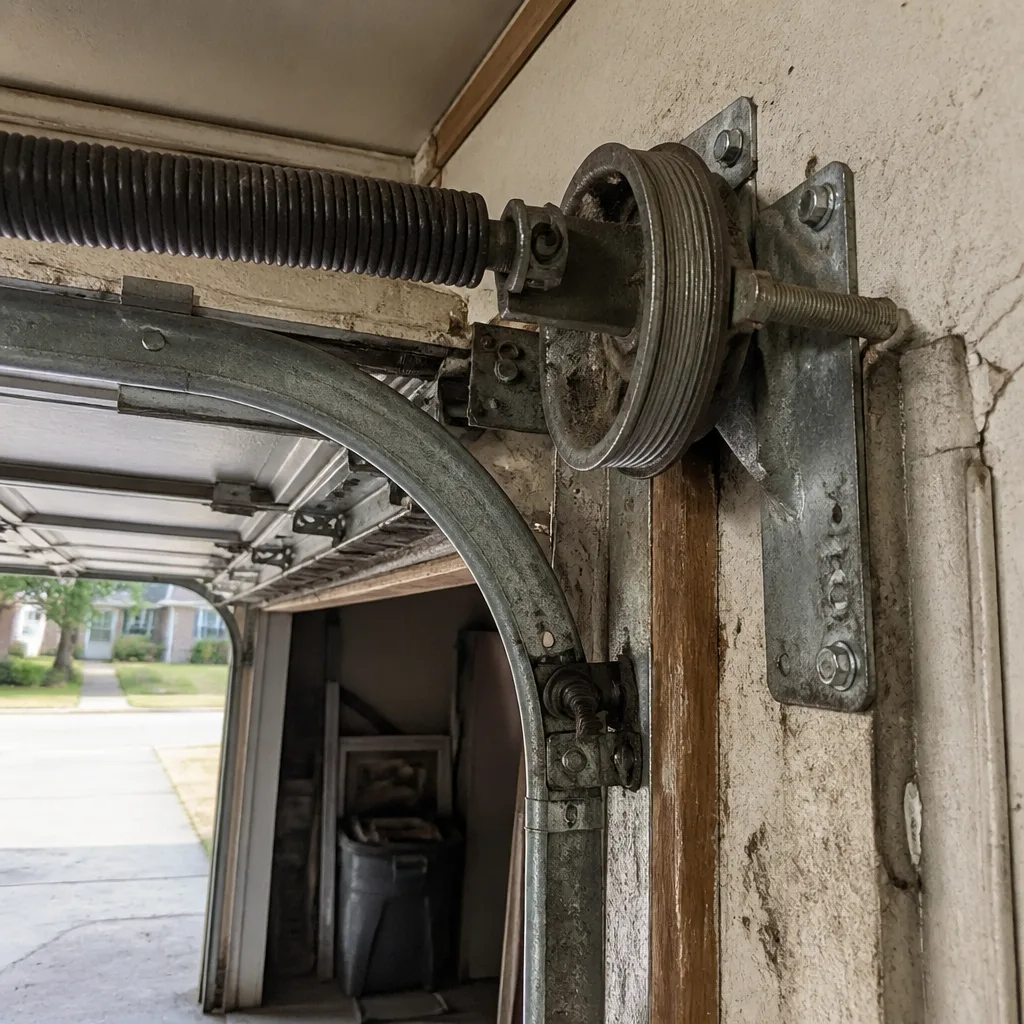 Before
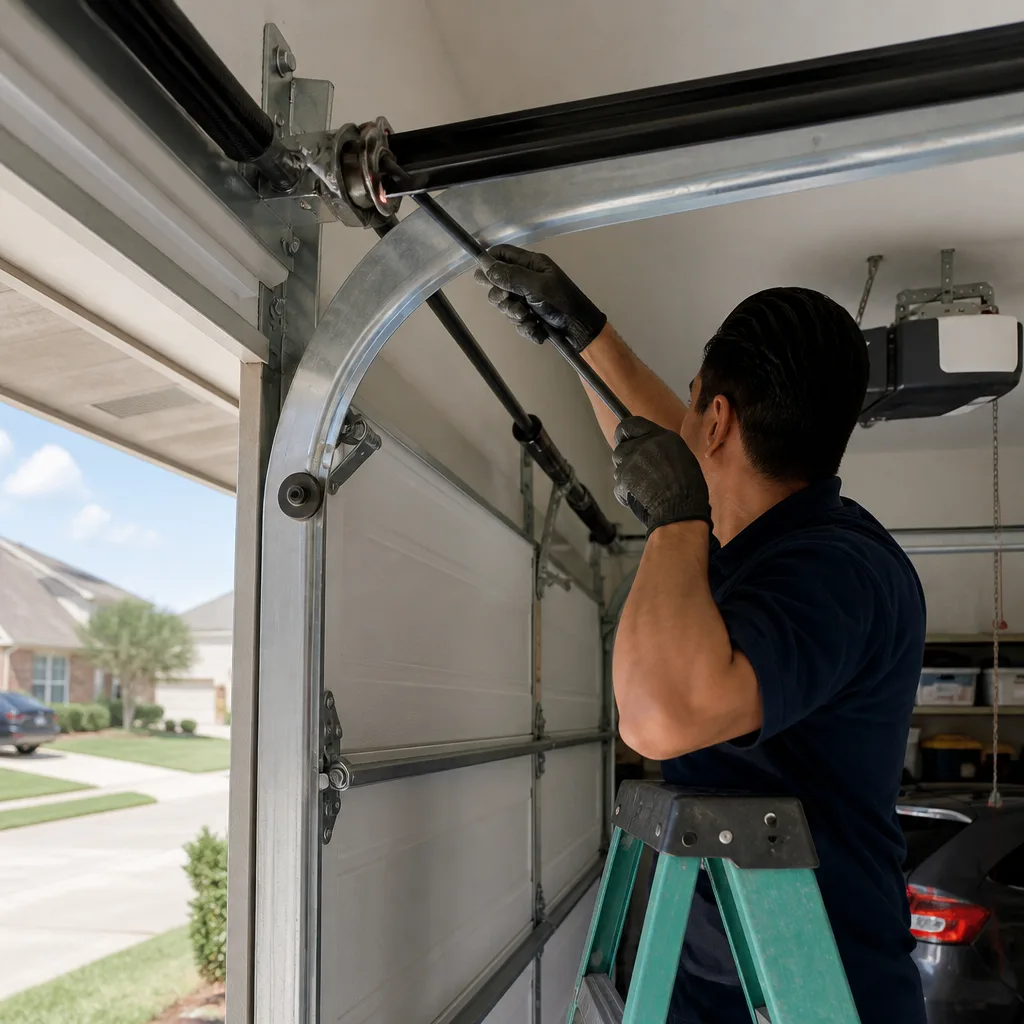 After
After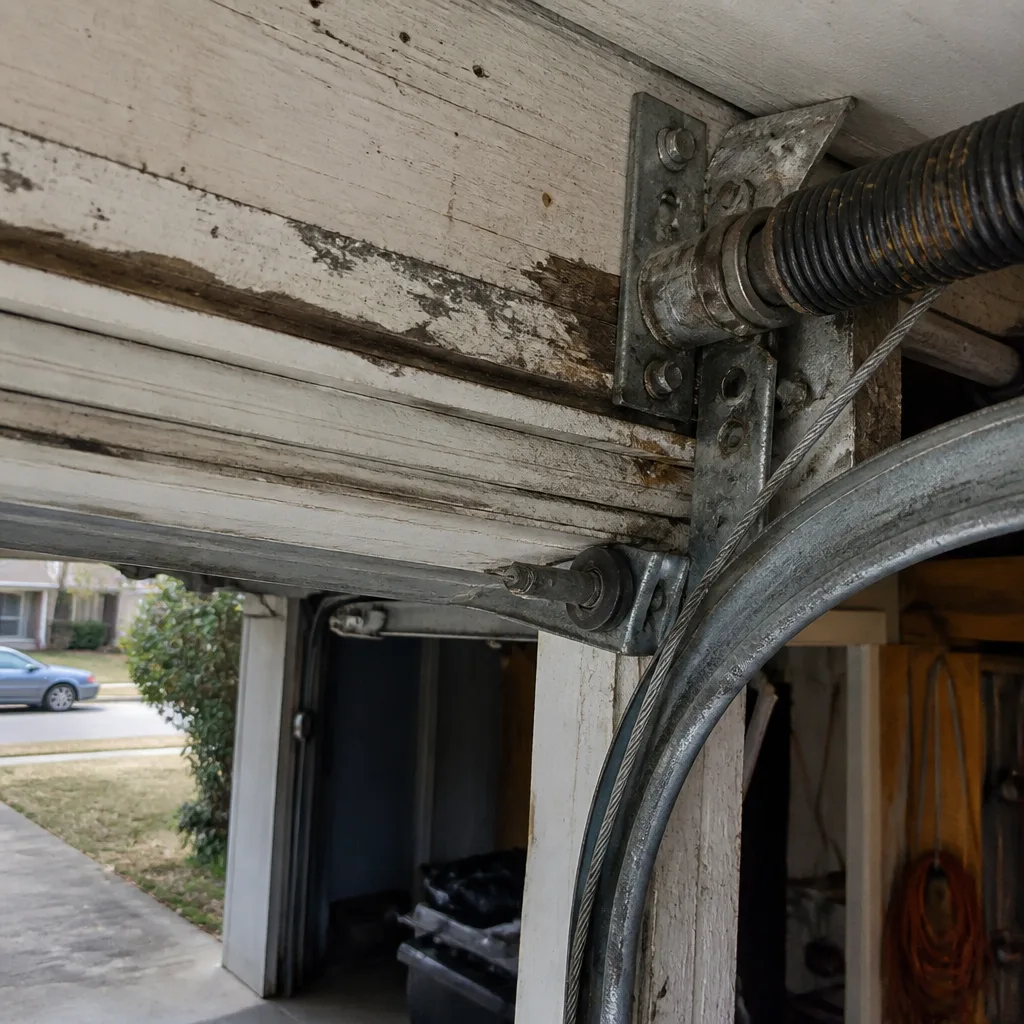 Before
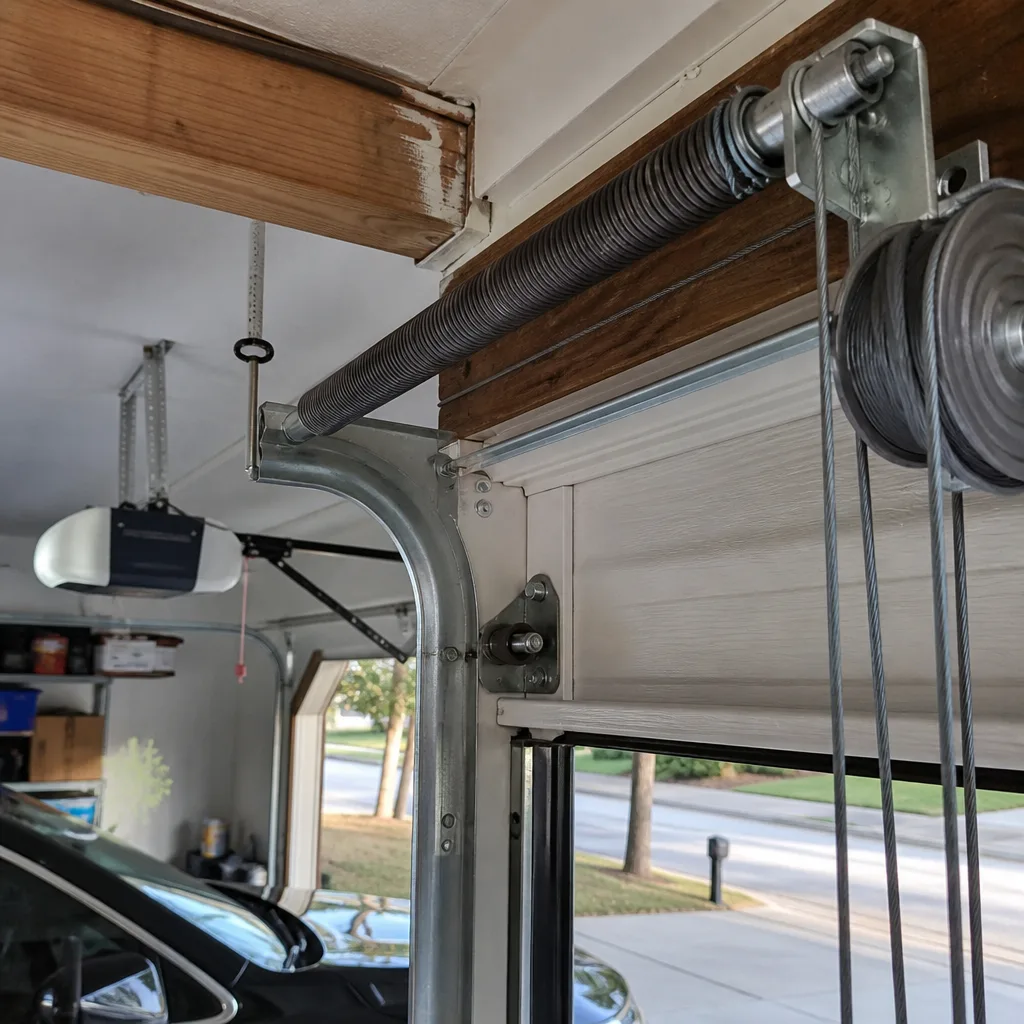 After
AfterSeasonal Garage Door Care for Pasadena: Year-Round Homeowner’s Guide
Most seasonal garage door guides were written for places with four equal seasons and a frost line. Pasadena isn’t one of those places. Here, a garage door that opens smooth in February can grind to a halt in March when floodwater wicks into the bottom rollers, and a door that worked fine all winter will let out a sound like a rifle shot in August when the heat finally kills a spring. This guide is built around the calendar that actually runs Pasadena: hurricane season, flood season, a two-week freeze that no one planned for, and nine months of humidity that rusts everything it touches.
Quick Answer
Seasonal garage door maintenance in Pasadena, Texas means a pre-hurricane prep pass in May, a post-flood inspection after any major rain event, heat-aware checks on the opener and springs from June through September, and a shoulder-season rust cleanup in October. For a deeper look at each season, see our Complete Guide to Garage Door in Pasadena. Do these four things and you’ll catch most failures before they strand a vehicle inside or let water into the house. The full schedule and checklists are below.
Table of Contents
- Why Pasadena’s Climate Punishes Garage Doors Differently
- Pre-Hurricane Season Prep Checklist: What to Do Before June 1
- After the Water Goes Down: Flood Recovery for Your Garage Door
- Summer Heat and the Parts It Kills First
- Pasadena’s Two-Week Fake Winter and What February 2021 Taught Us
- The Shoulder Season: October and November Rust Patrol
- Common Mistakes to Avoid
- When to Call a Professional
- Frequently Asked Questions
- The Bottom Line
Why Pasadena’s Climate Punishes Garage Doors Differently
A garage door in Pasadena lives in conditions that a door in Dallas or Austin never faces. The air here carries salt and industrial moisture from the Ship Channel, and it holds that moisture for months at a stretch. Metal parts that would be dry by noon in a drier county stay damp at the micro-level for days here. That is why we see more rust on track brackets, hinge pins, and roller stems in Pasadena than almost anywhere else in the Houston metro.
The second factor is wind. Pasadena sits in one of the windier corridors of Harris County, especially in neighborhoods east of Beltway 8 and south of 225. Garage doors are big flat sails. Even a door that balances perfectly on the spring scale gets pushed sideways by sustained 30-40 mph winds, and that sideways load wears the rollers unevenly and hammers the track brackets loose over two or three storm seasons. We regularly see doors in Pasadena with one track bowed outward and the other still true. That is a wind signature, and it does not happen in Katy.
Third is the water table and street flooding. Pasadena’s older neighborhoods, especially the grid streets around Southmore and Richey, sit low and drain into bayous that back up during heavy rain. A garage floor that takes on six inches of water for a few hours in September is still dealing with the effects at Thanksgiving: soaked bottom seal, swollen bottom panel, rust blooming on the lower track and hinges. If you live in Pasadena and your garage has ever taken water, your maintenance calendar is different from your neighbor’s across the channel in Deer Park.
Key Takeaways:
- Humidity here keeps metal damp for months, not hours
- Wind loads bend tracks and wear rollers asymmetrically
- Street flooding means some Pasadena garages need a post-flood protocol every single year
Pre-Hurricane Season Prep Checklist: What to Do Before June 1
Hurricane season opens June 1 and runs through November. The responsible Pasadena homeowner does a full door pass the last two weeks of May, when the weather is dry enough to work outside and before the first named storm has a track. We have been doing garage door repair in Pasadena since 2004, and we can tell you the homes that sail through storms are the ones whose owners did this check in mid-May, not the ones who called us from a flooded driveway at 9 p.m.
Here is the pre-hurricane pass, in order:
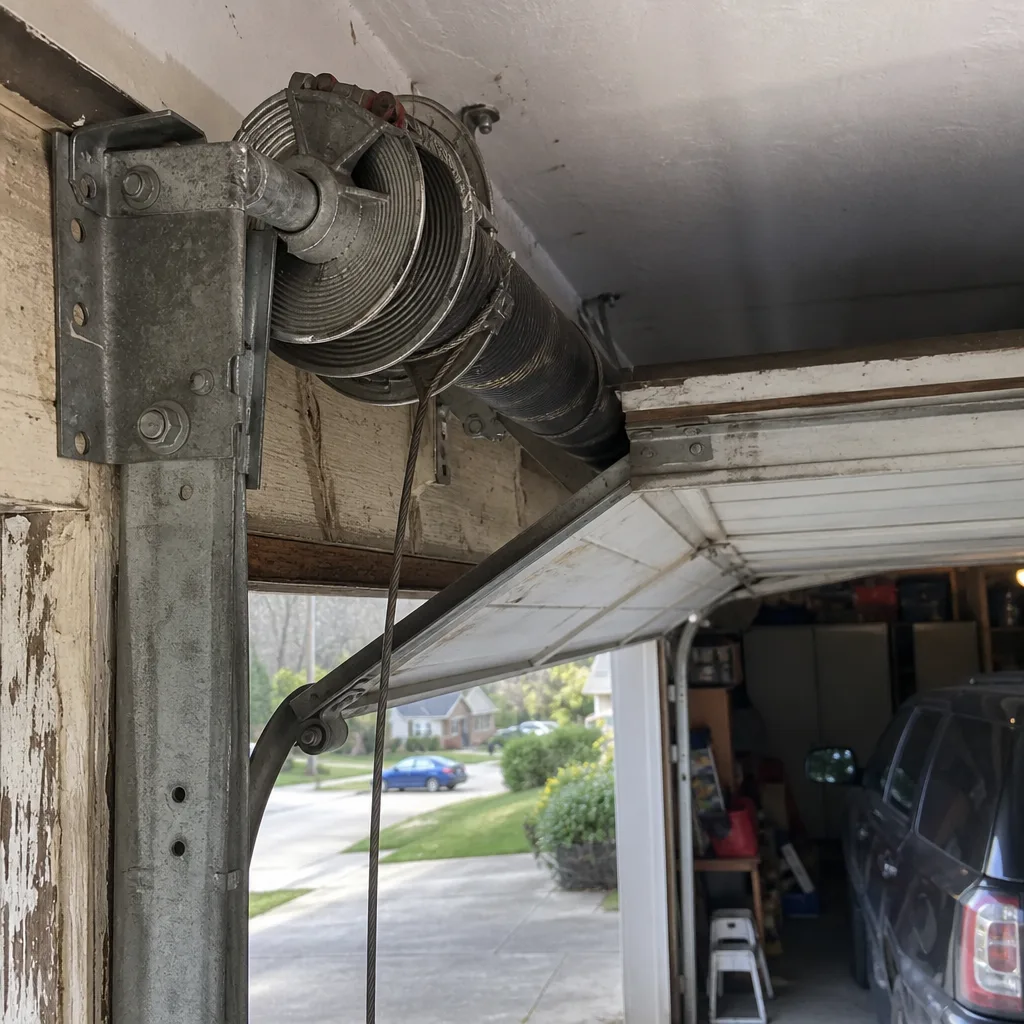
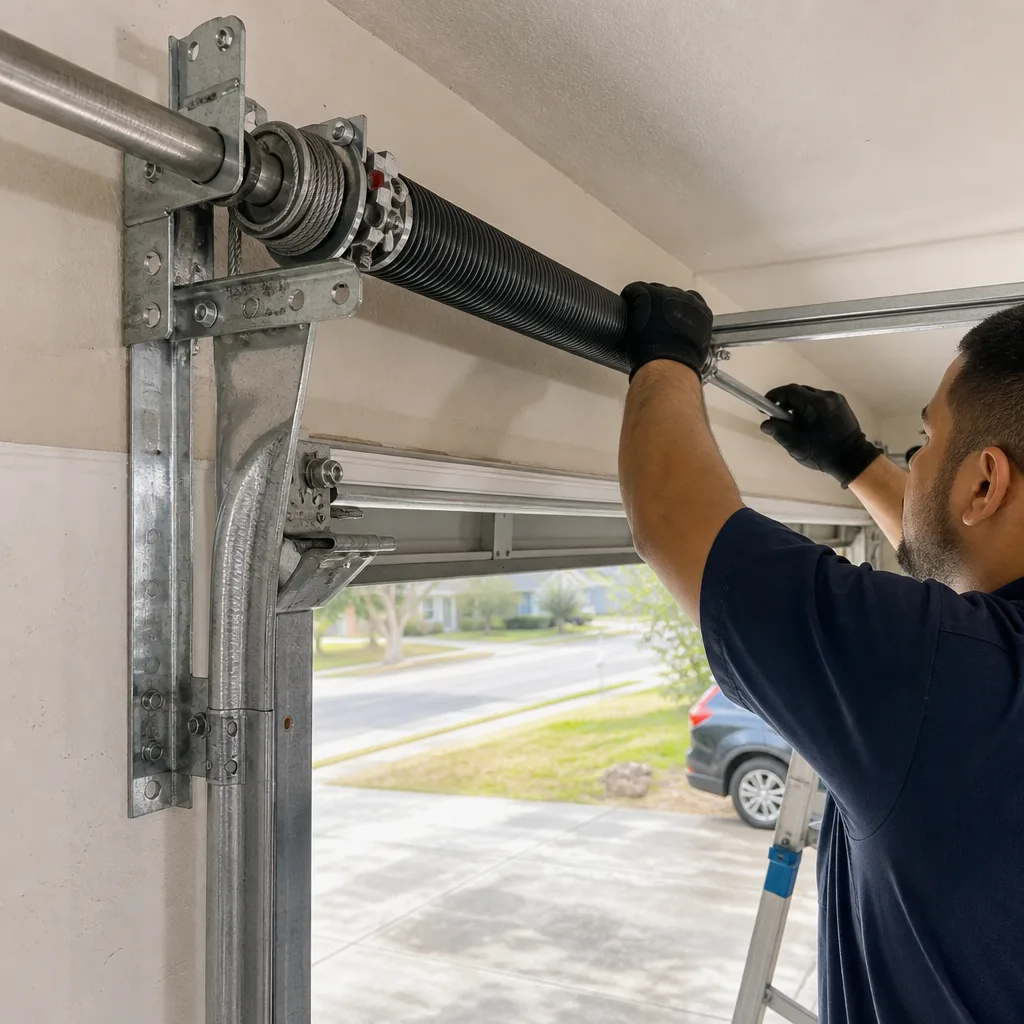
- Spring tension beware: Do not touch the springs yourself. But you can observe. Stand inside the garage, unplug the opener, and lift the door by hand halfway. It should stay put. If it creeps down or feels heavy and drops, one or both springs are near death. A spring that lets go during a storm can send the door crashing and lock a car in exactly when you need to evacuate. This is a call to a professional, not a DIY afternoon.
- Track bolts and brackets: Take a socket set and snug every lag bolt and bracket bolt you can reach on both vertical and horizontal track. Wind-induced vibration loosens these over the season prior. A loose horizontalf track at midnight during a hurricane gust is how a door jumps the rollers and falls inward.
- Bottom seal: Run a hand along the rubber at the bottom of the door. Pasadena’s heat rots this seal in about three years. If it is cracked, crumbling, or light shows through under the door, replace it before the first September feeder band. Water that enters under the door is the leading cause of soaked garage floors in the northern subs. It is also the cheapest fix on this list.
- Roller check: Look at each roller, especially the bottom two. Nylon rollers with chipped or flattened wheels need replacement. Steel rollers with rust on the bearing will grind and bind. Listen as the door moves in manual mode. If it sounds gravelly, that’s the rollers.
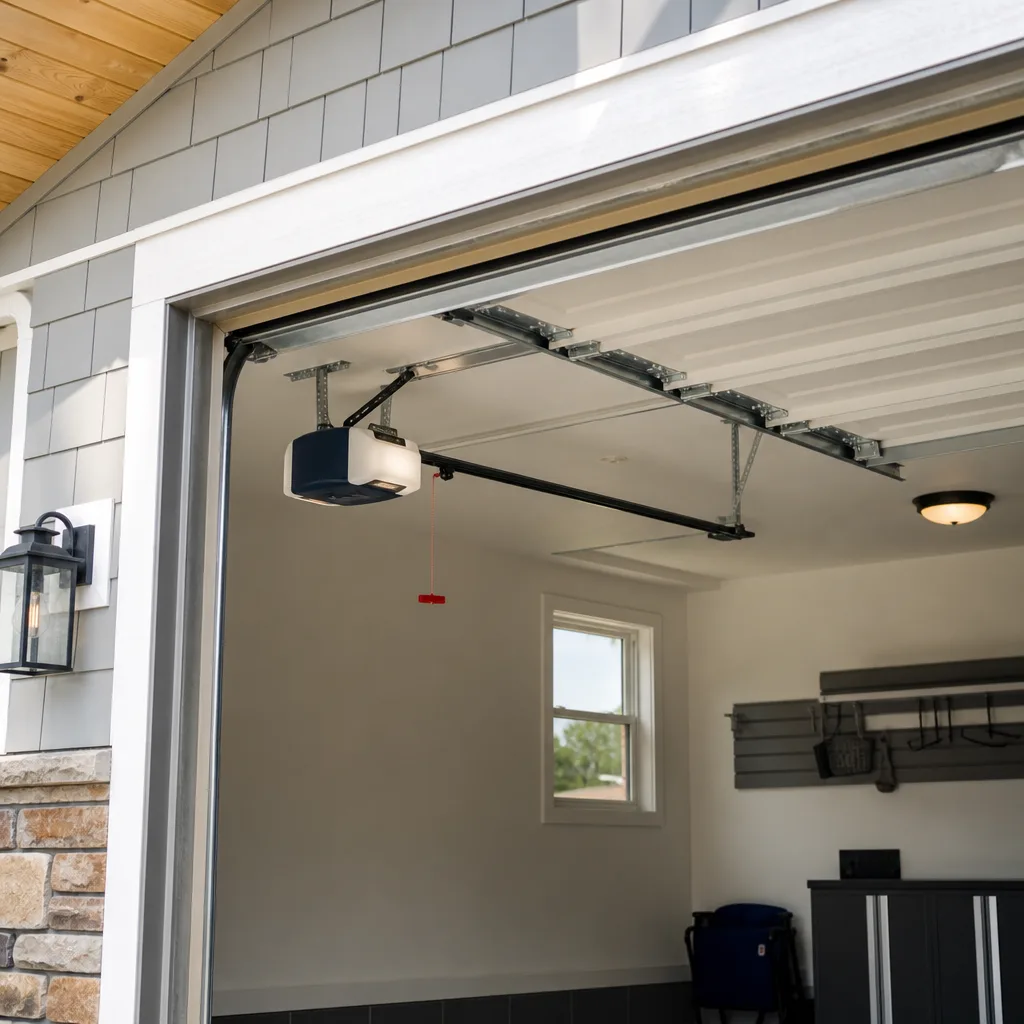
- Opener force test: Disconnect the opener, run the door by hand. If it is smooth and balanced, plug the opener back in and run it. The opener should close the door on a two-by-four laid flat without tripping the safety reverse. If it slams and does not reverse, your governor or force setting is off, and that is a door that can crush a pet or person. Also verify the electric eye sensors are straight and clean; a misaligned eye in a storm is a door that won’t stay shut.
- Document everything: Take ten to twenty date-stamped photos of the door, tracks, springs, opener, and garage floor from the inside and outside. Store them. If a hurricane damages the door, these photos are the difference between a denied insurance claim and a paid one. We cannot stress this enough. We have watched Pasadena homeowners fight adjusters for months because they had no “before” proof.
We quote the job on the phone and hold that number when we get there. If you find something during this checklist that worries you, call before June 1. Repair slots fill fast once a storm enters the Gulf.
After the Water Goes Down: Flood Recovery for Your Garage Door
Pasadena garages flood. Not every year, not every street, but often enough that every homeowner within the 100-year plain and half the ones outside it should know the drill. The water comes up through the floor drains, in under the door, or both. When it recedes, the door may still open and close. That does not mean it is fine. It means the damage has not shown up yet.
Here is the post-flood recovery order:
- Do not force the door if it resists. Floodwater carries silt, sand, and debris into the track. Forcing the door through a gritty track scores the aluminum rail and destroys the rollers. Work the door gently by hand in manual mode first. If it binds, stop.
- Wash the track and rollers.Use a garden hose, not a pressure washer. Flood silt is abrasive. Rinse the full length of both vertical tracks, the horizontal track, and every roller. A door that goes un-rinsed after a flood will sound like a pepper grinder within two weeks as the grit chews the bearings.
- Check the bottom panel. Wood-core and steel panels with a foam interior are sponges. A bottom panel that sat in water swells. You will know within a few days: the door will start binding at the bottom or the panel will start separating at the corners. In our experience in Pasadena neighborhoods like Burke Meadow and Parkgate, a steel door that sat in six inches of water for more than a few hours often needs a bottom panel replacement within the year, even if it looks fine today.
- Check the bottom seal and its retainer. Water rots the rubber and rusts the aluminum retainer strip. Pull the seal off and look inside the channel. If the retainer is pitted, replace both. A rusted retainer will let water in on the next rain even with a new seal.
- Inspect lower hinges and track brackets.These are the lowest steel parts, so they rust first. Surface rust can be scraped, sanded, and painted. Deep pitting means replacement. When in doubt, replace a bracket. A bracket that fails while the door is moving can send the door off the track and into a vehicle.
- Dry the opener.On a LiftMaster, Chamberlain, or Raynor opener, if water reached the power head, unplug it, let it dry for 48 hours, and check for signs of water inside the housing before reconnecting. If it was submerged, replacement is safer than repair. We have pulled openers out of Pasadena garages that were tripping breakers weeks after the water receded.
If any of this reveals more damage than you want to fight alone, we are a Otto’s Garage Door home call away. We have been drying out Pasadena garages since 2004.
Summer Heat and the Parts It Kills First
Pasadena summers do two things to a garage door system: they cook the electronics and they age the springs on an accelerated clock. Most people think heat is harmless to a metal door. It is not.
The opener’s logic board is the most heat-sensitive component in the system. On a 105-degree day, the garage interior in a southwest-facing house can hit 130-plus. Circuit boards are rated for around 150 before failure, but repeated heat cycling kills the solder joints and capacitors over several seasons. If your opener starts acting possessed in August, running by itself, refusing to respond to remotes, or only working after the garage cools at night, that is heat fatigue on the circuit board. We see it every August in older Pasadena homes with uninsulated garage doors. A garage door opener in Pasadena that lives in a hot garage benefits from a simple exhaust fan or a vent, and the difference in lifespan is real.
Springs are the second victim. High-cycle springs oiled and clean in a 75-degree garage will deliver their rated cycles. The same spring in a 130-degree garage loses temper faster. Heat accelerates the metal fatigue that ends every spring’s life. We count spring cycles the way you count tire miles, and I will tell you what is left on yours. A ten-year-old spring in Pasadena has effectively done fourteen years of work in a Kansas garage.
Finally, paint and panel life. Black steel doors on south or west exposure in Pasadena absorb heat that a white door reflects. The panel skin and the paint bond fail faster, especially on the bottom panels that get both heat and reflected driveway heat. We have replaced Pasadena doors where the paint on a south-facing black door was chalky and peeling within six years while the same door on the shaded north side of the house looked new.
What to do in summer:
- Run the door early morning or late evening when the opener board is cooler
- Look for hairline stress cracks at the spring ends; call if you see any
- Touch the door face at 3 p.m.; if it burns your hand, consider a lighter paint or a shade sail before your next door
Pasadena’s Two-Week Fake Winter and What February 2021 Taught Us
February 2021 was a wake-up call for every Pasadena homeowner with a garage door. Temperatures dropped into the teens for days. Pipes froze. Grids failed. And garage doors, which had never been spec’d for a hard freeze, seized up all over the county.
The cold itself did not kill the doors. What killed them was the moisture already in the system. Pasadena garages hold humidity year round. When that moisture-free air hit, the water inside the track, the roller bearings, the hinges, and the spring coils froze solid. Doors that opened Wednesday evening were welded shut Thursday morning. And here is the dangerous part: some homeowners, desperate to get a generator out of the garage or a car onto the road, forced the door. A frozen roller or frozen spring is a loaded gun. Forcing the door shears the roller stem, twists the track, or snaps a cable and sends a 200-pound door off balance. Respect it.
If we see another freeze like 2021, here is the recovery order:
- Do not force it. If the door will not move by hand, stop. Forcing is how doors end up on the concrete.
- Warm the space slowly. A space heater or heat lamp aimed at the track and lower rollers, not the spring. Give it an hour. The expansion will free the ice without breaking parts.
- Check the cables before running the opener. If one cable is slack or off the drum, the door is out of balance and running the opener will do real damage.
- Plug the opener back in and cycle once by hand. If it is stiff or rough, leave it alone and call us.
In our experience, the lasting damage from February 2021 in Pasadena was not immediate breakage. It was rust. The ice-thaw cycle accelerated corrosion on every exposed steel surface for months afterward. A door that weathered the freeze cleanly often needed new rollers and new hinge pins by spring.
The Shoulder Season: October and November Rust Patrol
Here is the maintenance window most Pasadena homeowners skip, and it is the single best one on the calendar. Hurricane season is winding down. The furnace-like heat has broken. Humidity drops briefly before winter moisture sets in. October and early November are the best weeks to handle rust, repaint brackets, replace seals, and grease everything that needs grease before the winter rain arrives.
This is also the one window where the door is not fighting extremes. It is not expanding in heat and not frozen. You can trust the manual balance test in October. A door that balances clean in October will balance through the mild winter. A door checked only in August tells you less because the heat affects spring tension and roller drag.
Here is the shoulder-season pass:
- Rust hunt: Every hinge pin, every bracket bolt, every track flange. Surface rust gets a wire brush and cold galvanizing spray. Rust through means replacement.
- Bottom seal inspection: Do it now, not in January when the seal is stiff and cold. If it is cracked, replace before the winter rain.
- Roller lube: A drop of white lithium on each roller stem, not WD-40, which is a solvent and not a lube. A drop on each hinge pin.
- Track clean:Wipe the inside of the vertical tracks with a rag. Built-up dust and grime from the summer dry season acts like sandpaper on the rollers.
- Opener test: Full force test, eye alignment, remote range. If the opener is fourteen years old, this is the season to price a replacement before the winter rush.
- Document again:New date-stamped photos to add to your running file. This file is your insurance claim’s best friend.
We do a lot of garage door installation in Pasadena in October and November because homeowners realize during the rust patrol that their twenty-year-old door is done. That is fine. A new door before the winter costs less than an emergency replacement in a cold snap.
Common Mistakes to Avoid
- Lubing the track itself. The track does not need lubrication. Grease on the track attracts Pasadena’s gritty dust and turns the smooth rail into sandpaper. Lube the roller stems and hinge pins, not the rail.
- Using WD-40 on springs or rollers. WD-40 is a water displacer and solvent. It washes away the grease that is already there. Use a dedicated garage door lubricant on springs and white lithium on pins.
- Ignoring a door that “works fine.” The most common failure we see in Pasadena is a spring that breaks with zero warning because the door kept opening and closing until the last cycle. A door that works fine is a door that has not failed yet. Spring inspection is annual.
- Testing only in August. Heat skews your balance test. If you are only checking the door in triple-digit heat, you are getting a false read. Test in October.
- Forcing a frozen or flooded door. This is the fastest way to turn a $100 repair into a $800 replacement. If it resists, stop and call.
- Skipping the insurance photos. We have watched Pasadena homeowners lose real money because they could not prove the pre-storm condition. Ten photos a year takes five minutes and protects thousands in claims.
When to Call a Professional
Some jobs on a garage door are routine. Some are not, and the line between them is sharper than people think. Our DIY vs Professional Garage Door: The Pasadena Homeowner’s Decision Guide explains where that line falls. If a spring is showing rust at the ends, if a cable is fraying, if the door sags to one side or jumps the track, or if the opener makes a grinding sound that was not there last week, call before you close the door again. These are not maintenance items. They are failure-in-progress. We answer the phone 24/7, often Otto himself, and we quote on the call and hold that number when we get there. Otto’s Garage Door offers free estimates in Pasadena - call (346) 623-5419.
Frequently Asked Questions
Twice a year: once in May before hurricane season and once in October for the shoulder-season pass. In Pasadena’s climate, annual service is not enough, because the humidity and wind load put more wear on the parts in twelve months than a drier climate does in eighteen.
A basic seasonal tune-up in Pasadena typically runs $85 to $180 depending on the age and condition of the door, and that usually includes balance adjustment, roller and hinge inspection and lube, track cleaning, and a spring cycle estimate. For a full pricing breakdown, see our Garage Door Cost Breakdown: The Pasadena Homeowner’s Reference for 2026. If parts need replacing, the price is quoted before the work starts and agreed before we touch the door. Call (346) 623-5419 for an exact quote - estimates are free.
Only the outside of the spring can be sprayed, and even that carries risk if the spring is under full tension. We do not recommend touching the springs beyond a light spray of garage door lubricant from a distance. If the spring shows rust at the ends or you hear a groaning sound on the way up, stop and call a professional before it snaps.
Rinse the track and rollers with a garden hose, replace the bottom seal if it is compromised, and document every surface that got wet with date-stamped photos. Then do the full post-flood check from the section above within four weeks. A door that works today can start binding in November as the bottom panel swells and the lower hinges rust.
Yes. We carry common spring sizes, rollers, hinges, cables, seals, and opener parts on the truck, so most Pasadena repairs are completed on the first visit. For less common parts, we order and return within the week. Call (346) 623-5419 for an exact quote - estimates are free.
No. The number we quote on the phone is the number we honor at the driveway, and it is agreed before any work starts. If a hidden issue surfaces, we stop, show you, and agree a new number before we turn a wrench. That is how a locally owned Pasadena shop has kept customers for twenty years.
The Bottom Line
Pasadena does not give a garage door a gentle life. The humidity, the wind, the flood risk, the heat, and the rare freeze all compound each other, and a door that is ignored for three years will fail at the worst possible moment. Two passes a year: one in May, one in October. Document everything. Never force a door that resists. And if the spring is tired, the seal is rotted, or the opener is acting up, we have been doing residential garage door work in Pasadena since 2004, on every major brand of door and opener. Browse more guides & resources on our blog. Call (346) 623-5419 for a free estimate. I will be there myself. The name on the van is the name on the invoice and the name on the license.
Written by Otto Reinhardt, Owner at Otto’s Garage Door, serving Pasadena since 2004.