
Last updated September 10, 2026
Full 25-point door and opener safety check with every visit - springs, cables, rollers, tracks, and your LiftMaster or Chamberlain opener included
You get a price before we start. It does not change when the truck arrives.
 Before
 After
After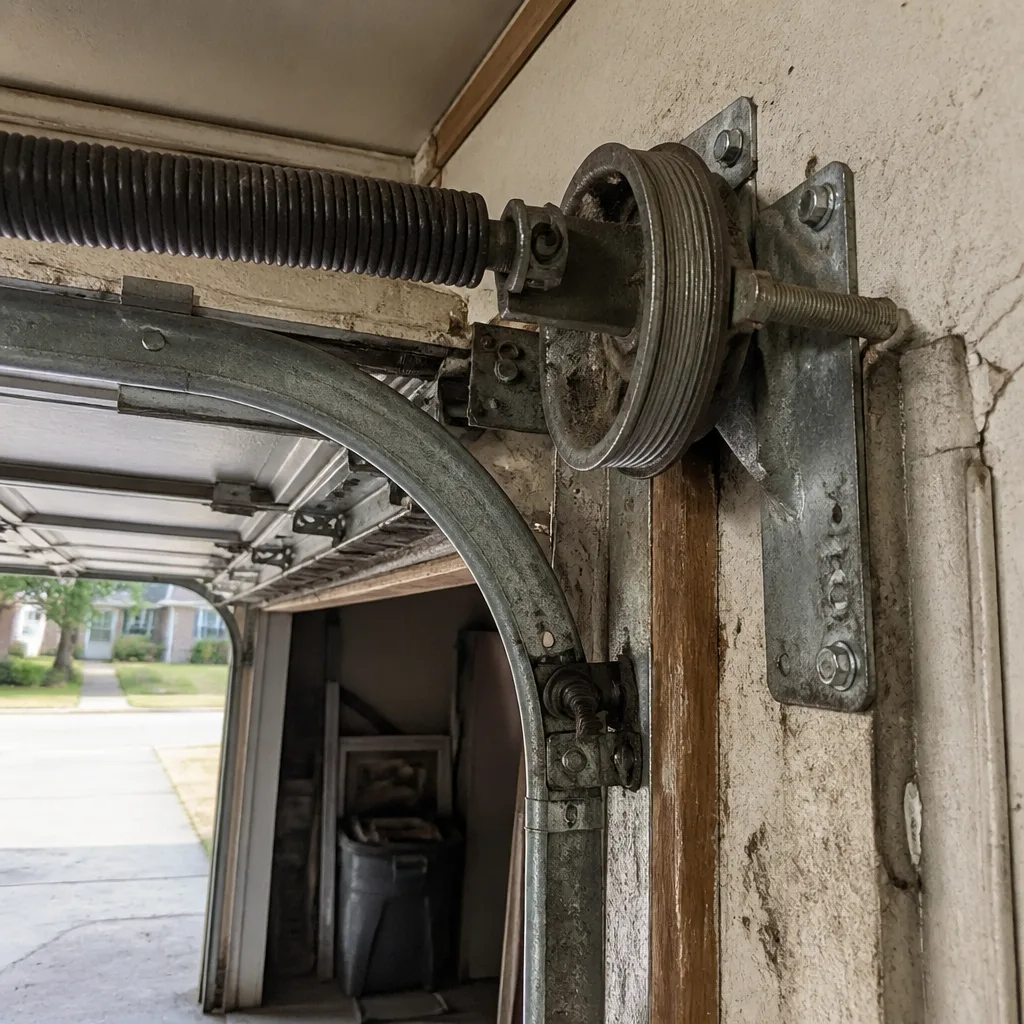 Before
 After
After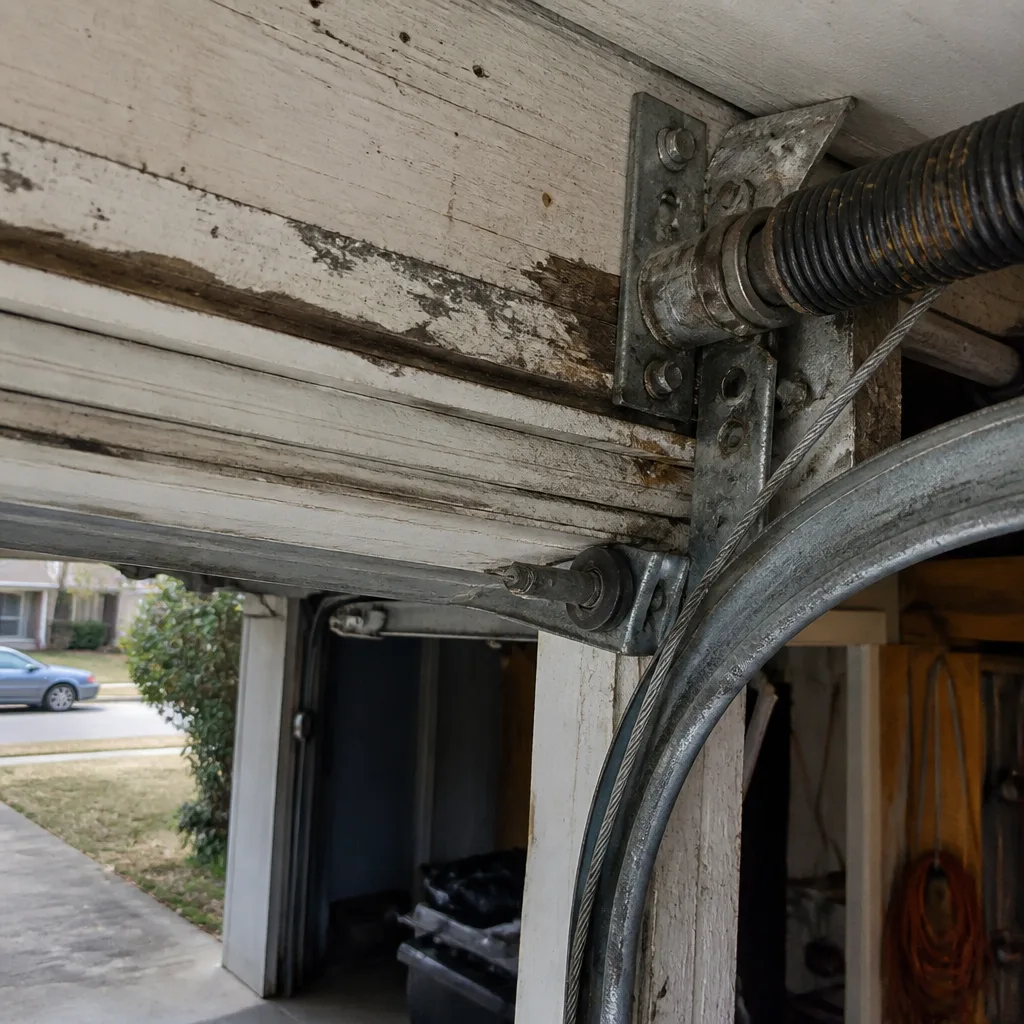 Before
 After
AfterDIY vs Professional Garage Door: The Pasadena Homeowner’s Decision Guide
A torsion spring on a standard residential garage door stores roughly 100 to 150 pounds of torque when wound, and when it snaps, it releases that energy in about a tenth of a second. That’s enough to break a wrist, fracture an orbital bone, or worse. But here’s what nobody tells you: lubricating your rollers, testing your auto-reverse, and swapping out a cracked bottom seal are all things you can knock out on a Saturday morning in Pasadena without calling anyone. This guide draws a clear line between the tasks that are genuinely safe for a homeowner and the ones where the failure mode isn’t a bad result, it’s a hospital visit. You’ll learn exactly which repairs you can handle, what they’ll cost you in tools and time, and when calling a pro is the only honest answer. For more, see our Garage Door Repair Maintenance Checklist for Pasadena Homeowners.
Quick Answer
DIY garage door work in Pasadena is safe for low-risk maintenance tasks like lubrication, sensor alignment, and weather seal replacement, but anything involving torsion springs, cables under tension, or full panel replacement should be left to a professional. The spring system alone accounts for the majority of garage door injuries every year, and Gulf Coast humidity makes corroded hardware behave unpredictably. When in doubt, a free estimate from a local Pasadena shop costs you nothing and tells you exactly where your door stands.
Table of Contents
- The Line Between Safe DIY and Hospital-Risk Work
- Why Pasadena Humidity Changes the DIY Equation
- Tasks You Can Safely DIY This Weekend
- Opener Work: What You Can Touch vs. What Voids the Warranty
- The Real Cost of DIY in Pasadena: Tools, Time, and Second Hands
- Wind-Load Certification: What a YouTube Install Actually Costs You in Harris County
- Common Mistakes to Avoid
- When to Call a Professional
- Frequently Asked Questions
- The Bottom Line
The Line Between Safe DIY and Hospital-Risk Work
Most garage door advice online gets this wrong in both directions. Half of it scares you into thinking you need a service call to wipe down a sensor lens. The other half makes winding a torsion spring look like changing a bike tire. Here’s the truth from someone who’s worked on Pasadena garage doors since 2004: the line isn’t about skill level, it’s about what happens when the part fails while your hands are on it.
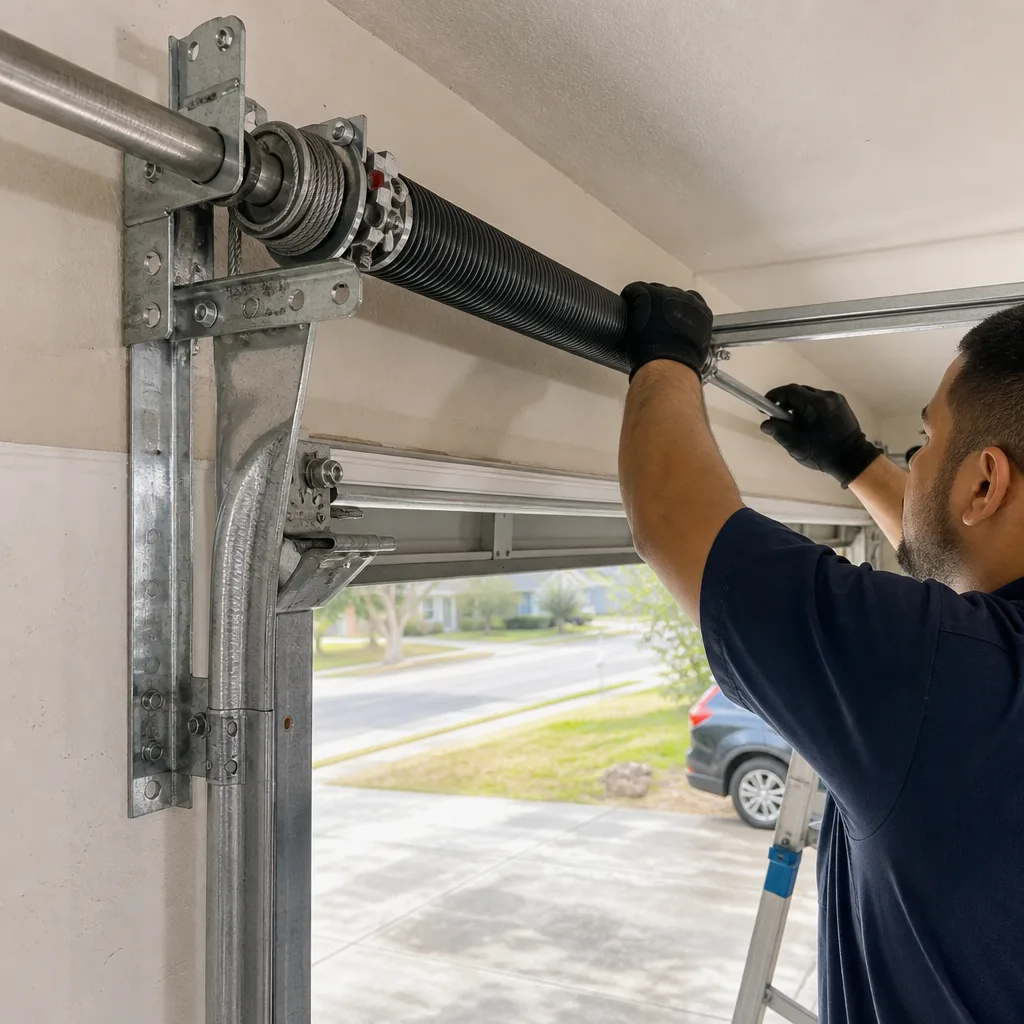
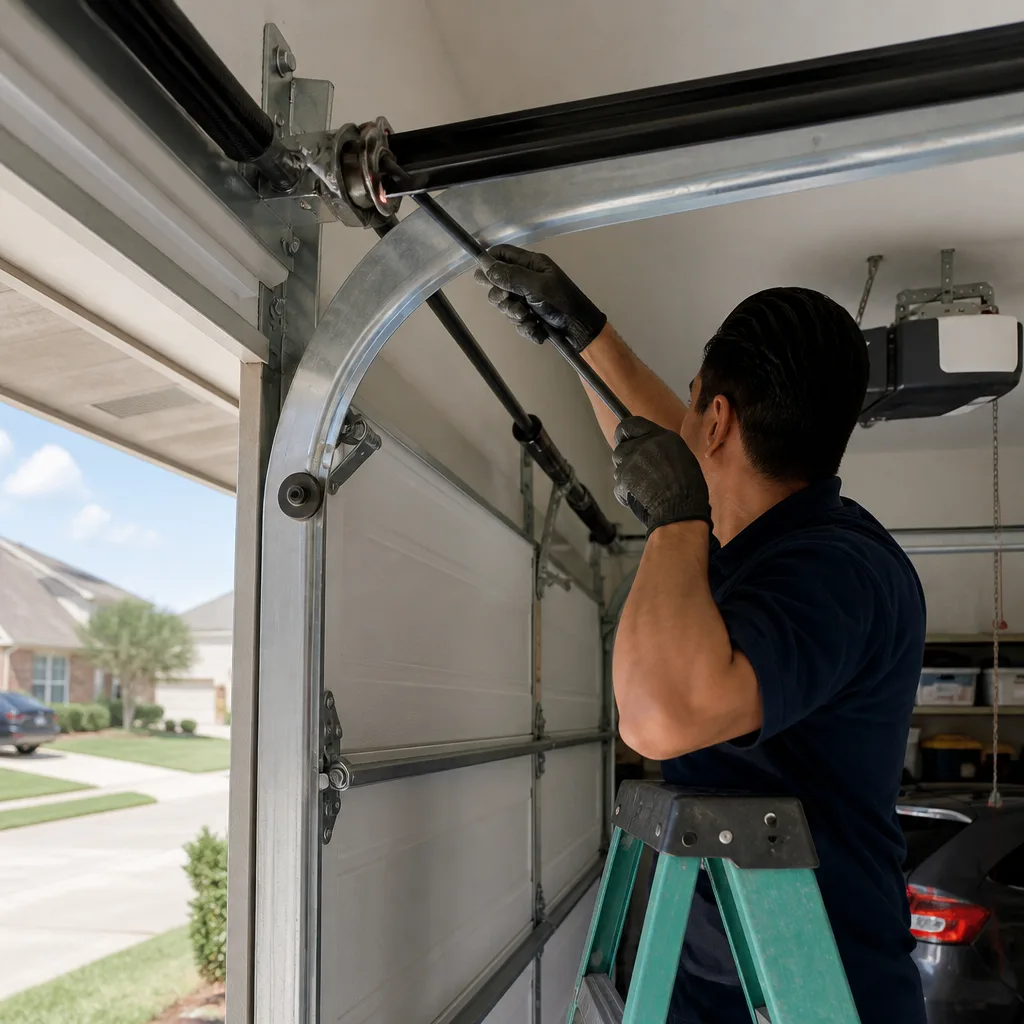
A door is 200 pounds riding on two springs. Respect it. When a torsion spring fails, it doesn’t fail gradually. It snaps without warning and the metal cone on the end becomes a projectile. When a lift cable under tension lets go, it whips through the air with enough force to take off a finger. Those aren’t warnings designed to scare you, they’re the physics of stored mechanical energy. You can’t outwork physics with a YouTube tutorial.
Tasks where the failure mode is cosmetic or inconvenient are fair game for a careful homeowner. Tasks where the failure mode is a 200-pound door falling on you, a tensioned cable whipping, or a spring cone ejecting at speed are not. That’s the whole decision framework. If you remember nothing else from this guide, remember this: if the part you’re touching is holding weight or storing tension, leave it alone.
Pasadena homeowners in neighborhoods like Baywood Oaks, Village Grove, and Red Bluff Terrace call us about the same core issues year after year: broken springs, snapped cables, doors off track, and openers that won’t stop straining. The frustrating part is that many of these calls start with someone who watched a video, got halfway through a spring replacement, and realized the tool they needed costs more than a service call would have in the first place.
If you’re not sure where your garage door stands, start with garage door repair in Pasadena to see what a professional assessment actually covers.
Why Pasadena Humidity Changes the DIY Equation
Pasadena sits close enough to Galveston Bay and the Houston Ship Channel that the air doesn’t just get humid, it carries salt and industrial residue. That combination does two things to your garage door hardware, and both of them matter for the DIY-versus-pro decision.
First, it means your rollers, hinges, and tracks need lubrication more often than they would in, say, a dry inland climate. Surface rust forms faster, and the moisture attracts dust and grit from the refineries and port traffic into the moving parts. A homeowner who lubricates their rollers every six months will get noticeably more life out of a set of rollers than one who waits until they hear grinding. This is one of the highest-value DIY tasks you can do in Pasadena, and we’ll cover exactly how below.
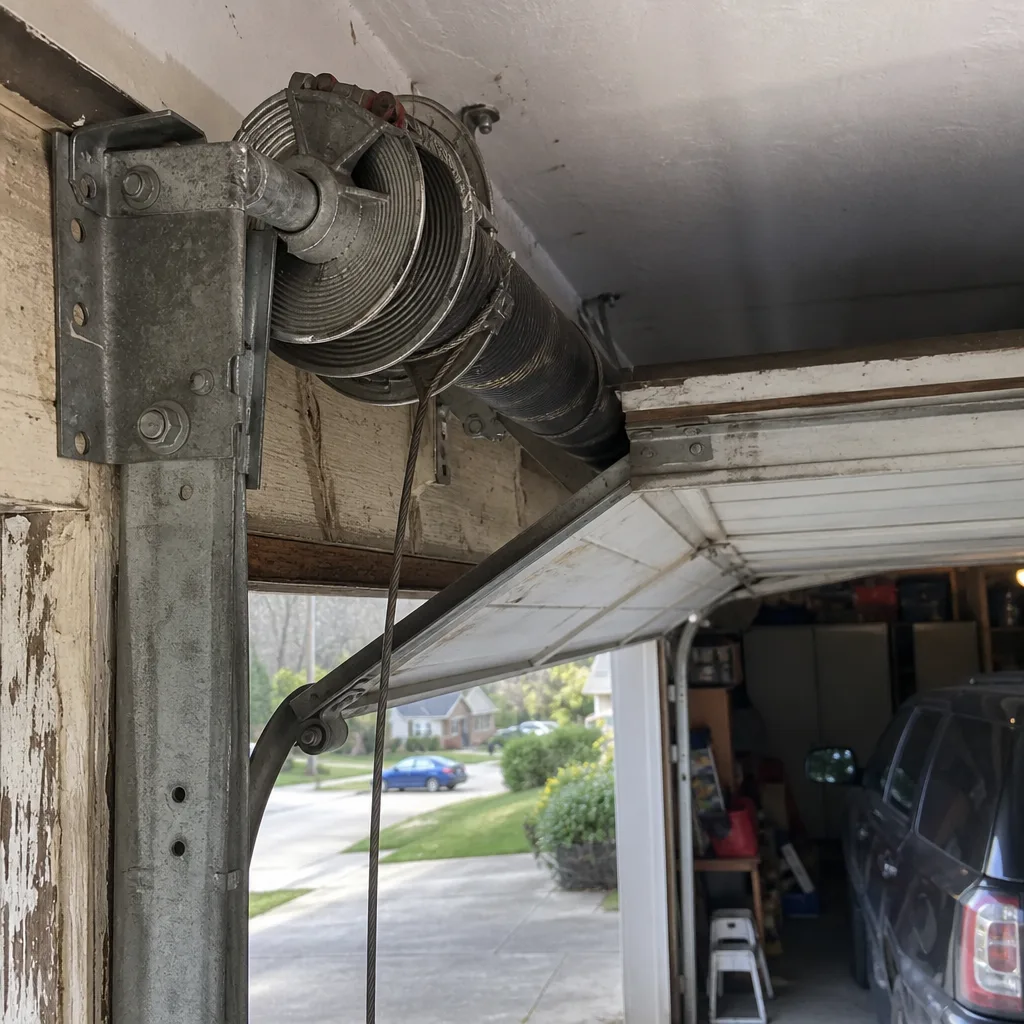
Second, that same humidity corrodes spring hardware in ways that make DIY spring work more dangerous here than in drier regions. Winding cones rust to the torsion tube. Set screws fuse in place and strip when you try to back them out. Spring coils develop surface pitting that creates weak points you can’t see. When a corroded spring finally lets go, it doesn’t behave like the clean break you see in a tutorial video. It fails violently and unpredictably. We’ve seen springs in older Pasadena homes where the winding cone had bonded so thoroughly to the shaft that the only safe removal involved cutting the shaft itself. That’s not a job for a crescent wrench and optimism.
This is why we tell Pasadena homeowners the same thing every time: lubricate your own door, inspect your own cables with a flashlight, but do not touch spring hardware that has spent five or ten years in Gulf Coast air. The corrosion creates failure modes that even experienced techs approach carefully.
Tasks You Can Safely DIY This Weekend
Here’s the list without hedging. These are tasks where the worst realistic outcome is you waste an afternoon or spend $40 on the wrong part.
1. Lubricating Rollers, Hinges, and Springs
This is the single best maintenance habit for a Pasadena garage door. Use a silicone-based or lithium-based spray lubricant, not WD-40, which is a solvent and will strip existing lubrication. Spray the roller bearings, hinge pivot points, and the spring coils themselves. Do this twice a year. It takes fifteen minutes and a can of lubricant that costs about $12.
2. Testing and Cleaning the Auto-Reverse Safety Sensors
The photo eye sensors near the bottom of each track get dusty and misaligned, especially with Pasadena’s humidity and the fine grit that settles on everything. Wipe the lenses with a dry cloth, check that both lights are solid, and test the auto-reverse by placing a 2×4 flat on the ground under the door and closing it. If the door doesn’t reverse within two seconds of contact, the sensors need adjustment or replacement. You can realign sensor brackets yourself with a level and a screwdriver, a zero-risk task that takes ten minutes.
3. Replacing the Bottom Weather Seal
Pasadena rain comes in bursts, and a cracked bottom seal lets water, leaves, and bugs into your garage. Replacing it is a slide-in or pull-out job depending on your door model. You’ll need the correct T-style or bulb-style seal for your specific door brand, which most homeowners can source for $20 to $40. No springs, no cables, no tension. Pull the old seal out, slide the new one in, trim to length.
4. Tightening Visible Bolts and Brackets
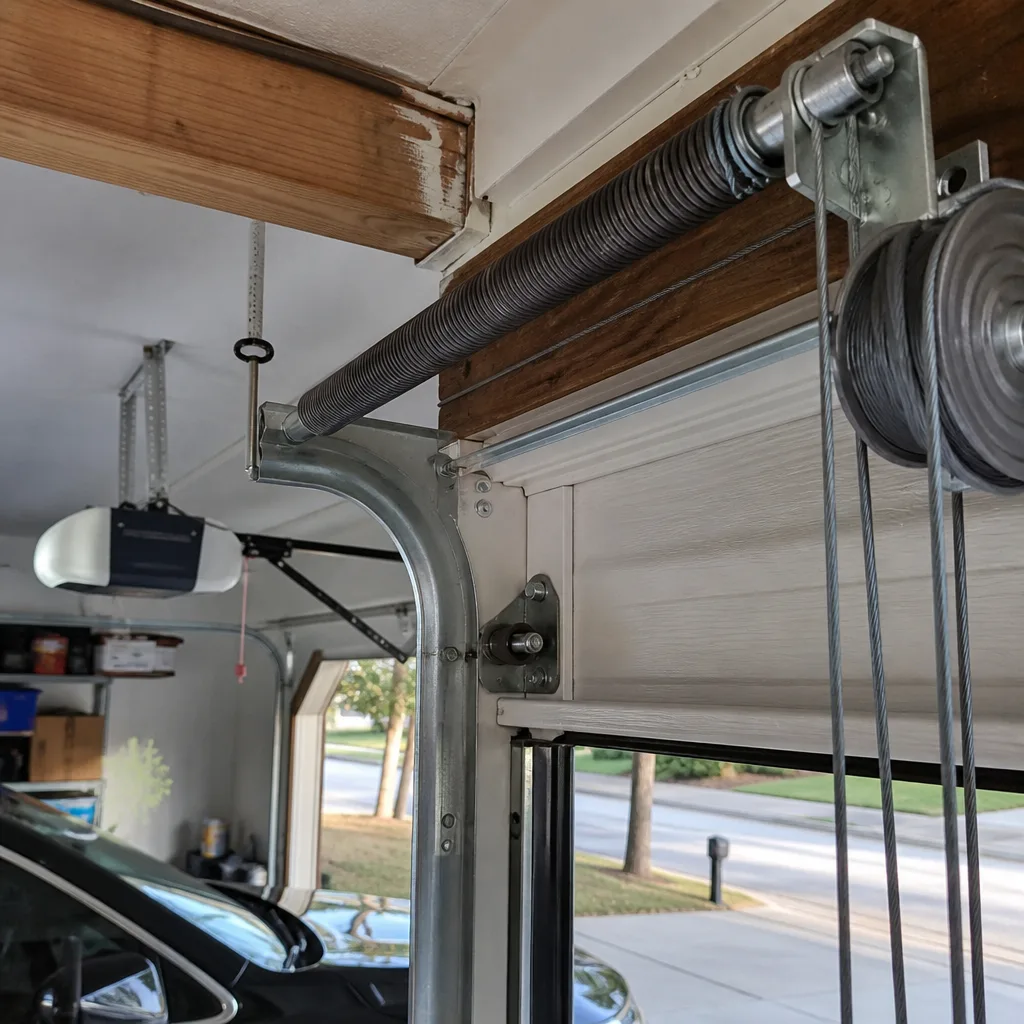
Grab a socket set and check every bolt you can see on the door hinges, roller brackets, and track supports. A loose bolt is an invitation for a door to work itself out of alignment. Tighten anything that’s wiggling. Do not touch the bolts on spring anchor brackets or cable drums, those are under tension and belong to a professional.
5. Opener Battery Replacement and Wi-Fi Reconnection
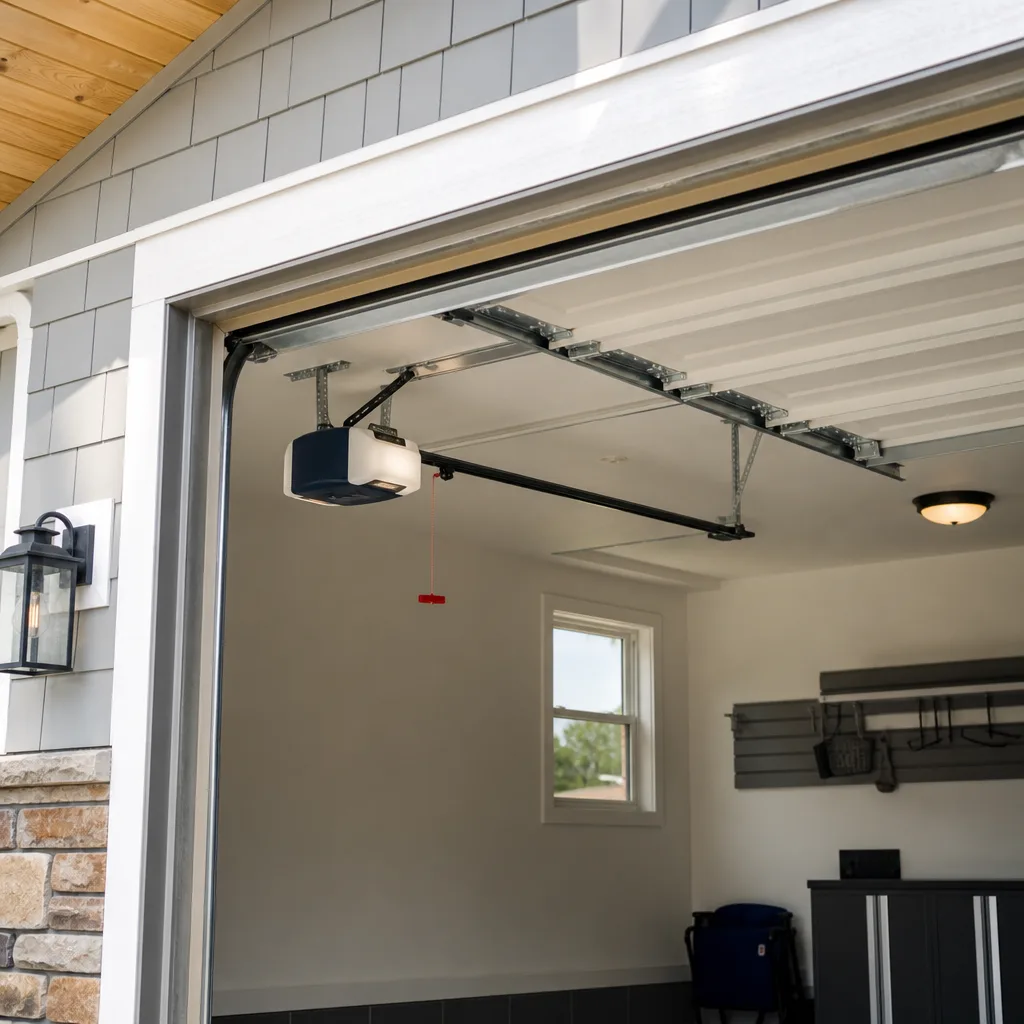
If your LiftMaster or Genie opener stops responding to the wall button or the app, the fix is often a dead battery in the remote or a dropped Wi-Fi connection. Swap the battery, reconnect the opener to your home network through the app, and test. Zero mechanical risk involved.
Opener Work: What You Can Touch vs. What Voids the Warranty
The opener is the one area where we see homeowners do damage that costs more than the repair would have. Here’s the breakdown of what’s genuinely safe to handle versus what will void a manufacturer warranty and potentially damage the opener.
Safe to Handle Yourself
- Force sensitivity adjustment: Every opener has two dials on the motor unit, one for up force and one for down force. If your door reverses when it shouldn’t, a small adjustment to the down-force dial usually fixes it. This is a homeowner-level task on Chamberlain, LiftMaster, Genie, and Wayne Dalton openers.
- Travel limit adjustment: If the door doesn’t close all the way or closes and then pops back up, the travel limit dials need a small nudge. Again, this is designed for homeowner access.
- Safety sensor cleaning and realignment: Covered above. This is the single most common cause of a door that refuses to close.
- Wi-Fi module swap or reconnection: If you have a Genie or Chamberlain smart opener and the app loses connection, the fix is usually a network-side issue or a simple module replacement that plugs into a port on the motor unit.
- Battery replacement in remotes and wall consoles: A $3 fix that solves a surprising number of “the opener is dead” calls.
Leave Alone: Warranty-Voiding Work
The circuit board inside a modern opener is not a homeowner repair item. Opening the motor housing to replace a logic board voids the manufacturer warranty on most brands, including Genie and LiftMaster. The same applies to replacing the internal gear and sprocket assembly. If your opener is grinding, buzzing, or running without moving the door, the diagnosis might be a stripped gear, a bad capacitor, or a failed circuit board, and opening the unit to investigate is where warranties go to die.
We also see homeowners replace an opener motor when the actual problem is a broken spring making the door too heavy to lift. If the opener is straining, the problem is almost never the opener. An opener is designed to move a balanced door, not to dead-lift 200 pounds. Before you spend $200 on a new opener, check whether the springs are doing their job. If you’re unsure, that’s exactly the kind of thing a professional assessment answers in fifteen minutes.
For opener-specific issues, see garage door opener service in Pasadena.
The Real Cost of DIY in Pasadena: Tools, Time, and Second Hands
Let’s talk about what DIY actually costs when you do it honestly, because the “I saved $200 by doing it myself” math usually leaves out the tools you had to buy and the Saturday you didn’t get back. For a full picture, check our Garage Door Cost Breakdown: The Pasadena Homeowner’s Reference for 2026.
Here’s a realistic breakdown for a common DIY job: replacing bottom weather seal and lubricating all moving parts.
| Item | Cost (Pasadena market) |
|---|---|
| Silicone or lithium spray lubricant | $12-$18 |
| Replacement bottom seal (brand-specific) | $20-$40 |
| Socket set (if you don’t own one) | $30-$100 |
| Level, flashlight, gloves, cleaning rags | $15-$30 |
| Your time (2-3 hours including trips to the hardware store) | Free, but it’s your Saturday |
Total out-of-pocket for a basic maintenance session: $80 to $190 if you’re starting from zero tools. If you already own the basics, it’s a $40 afternoon. That’s a genuinely worthwhile DIY project.
Now compare that to a spring replacement. A professional garage door repair in Pasadena for a pair of torsion springs typically runs $180 to $340 depending on spring size, cycle rating, and whether the door is standard or high-lift. The DIY version requires:
- Two winding bars (not screwdrivers, not rebar) - $25 to $60
- A full set of spring sizes to have the right one on hand - $100 to $200 for the springs alone
- A second person who knows what they’re doing - priceless, and usually not available at 9 p.m. when the spring breaks
- The willingness to take a risk we’ve already described - impossible to put a price on
You’d spend nearly as much on parts and tools as you would on a professional repair, and you’d be doing it without the thousand-repetition experience that tells a pro when a cone is seating wrong. This is the math most DIY guides won’t show you.
One more consideration: time. A professional spring replacement takes about an hour. Your first time doing it from a video takes three to four hours if everything goes perfectly, and it won’t go perfectly on a door that’s been in Pasadena humidity since 2009.
Wind-Load Certification: What a YouTube Install Actually Costs You in Harris County
This is the section nobody writes, and it’s the one that matters most to Pasadena homeowners living in the path of Gulf storms.
Garage doors sold in Harris County for homes built after the mid-1990s are generally required to meet wind-load certification standards specific to the Texas Gulf Coast. That certification is not a sticker on the door. It’s a documented engineering specification that says this specific door, installed with these specific mounting brackets, this track gauge, and these reinforcement struts, will withstand the wind pressure hazards for this wind zone. The certification lives or dies at installation.
When you install a door yourself from a big-box store or an online order, the manufacturer has no way to verify that the installation matched the certified configuration. The wind-load rating becomes unverifiable. If a storm rips the door off and you file a claim, your insurer may deny coverage for the damaged door, and in some cases, for water damage that entered through the opening, because the door was not installed to the documented wind-load standard. We’ve talked to Pasadena homeowners who learned this after the fact, and it’s not a phone call you want to have.
This applies most strongly to full door replacement and new installation. A professional installer who pulls a permit where required and installs to manufacturer specifications preserves the wind-load certification chain. A weekend install with no permit and no documentation does not. For Pasadena specifically, where hurricane season is a fact of life and insurance adjusters know what to look for after a storm, this is not a theoretical concern. See Garage Door Permits, Codes & Inspections in TX: What You Need to Know for details.
If you’re considering a new door, read through garage door installation in Pasadena to understand what a certified install actually includes.
Common Mistakes to Avoid
- Using WD-40 to lubricate the door. WD-40 is a penetrating solvent, not a lubricant. It strips existing grease and attracts more grime in Pasadena’s humid air. Use a silicone or lithium spray made for garage doors.
- Trying to force a door that moves but feels heavy. If the door feels like it weighs 300 pounds when you open it manually, the spring is failing or broken. Keep opening and closing it and you’ll burn out the opener or pull the door off track. Disconnect the opener and call before it gets worse.
- Replacing an opener when the spring is the actual problem. A working spring should let you open the door with one hand. If you can’t, the opener isn’t the issue. Replacing the opener won’t fix a broken spring, and you’ll be out $200 plus a service call.
- Watching one tutorial and assuming your door matches it. Garage door spring systems differ by brand, weight, track type, and age. A Clopay door from 2010 has different hardware than an Amarr from 2023. The video you’re watching might show a setup that doesn’t match what’s on your wall, and the mismatch is where injuries happen.
- Ignoring small problems until they become big ones. A noisy roller gets replaced for $15. A worn roller that fails quietly can jump the track and drop the door. Pasadena homeowners who do an annual inspection catch these things early.
- Buying the wrong seal because it looked right. Bottom seals are brand and profile specific. A T-style seal from one manufacturer doesn’t necessarily fit the retainer on another. If the seal doesn’t seat properly, it does nothing, and you’ve spent $30 on a strip of rubber that will fall out in a week.
When to Call a Professional
Call a professional any time the part you’re touching stores tension, holds weight, or sits between you and a 200-pound door. That means torsion springs, extension springs, lift cables, cable drums, bottom brackets, and full door sections. Call when the door is off its track and you can’t thread it back with light pressure. Call when the opener motor unit makes grinding sounds, because that’s a gear or capacitor issue inside the housing. Call when you need a new door installed and the wind-load certification matters to your insurance coverage. And call when you’ve already fiddled with something and made it worse, no judgment, we’ve all done it. Otto’s Garage Door offers free estimates in Pasadena, call (346) 623-5419.
Frequently Asked Questions
Most repairs in Pasadena fall between $75 and $400 depending on the task. Roller replacement, sensor realignment, and weather seal replacement typically run $75 to $180. Spring replacement runs $180 to $340. Cable replacement runs $150 to $250. Every job gets an upfront price before work starts, and that number stays the same when we’re done. Call (346) 623-5419 for a free estimate.
No. The price quoted on the phone or at the visit is the price on the invoice. If we find something unexpected during the job, we stop, show you what we found, and quote the additional work before touching it. You approve it or you don’t, and nothing gets added without your say-so. That’s a promise Otto has honored on every job since 2004.
We strongly advise against it, not because we don’t think you’re capable, but because the failure mode of a mistake is severe injury. Torsion springs store enough energy to break bones or worse, and Pasadena’s humid, salty air corrodes the components in ways that make them fail unpredictably. The tools alone cost nearly as much as a professional repair. If you’re determined to learn, at minimum have an experienced person with you and use proper winding bars, never improvised tools. But honestly, this is the one job we’d tell our own family to call a pro for.
We work on all major brands, and for the Texas Gulf Coast specifically, we’ve had good long-term results with Clopay and Amarr doors with steel construction and proper rust-resistant hardware. Wayne Dalton also makes solid options at a mid-range price point. The brand matters less than the installation, the cycle-rated springs, and the maintenance schedule. A cheap door installed correctly will outperform an expensive door installed badly.
Yes. Our trucks carry the most common spring sizes, cables, rollers, hinges, seals, and opener parts so the job gets done in one visit. That matters in Pasadena when your car is sealed in the garage and you need to get to work. If a specific part needs to be ordered, we tell you before the visit and give you a timeline.
Standard springs are rated for about 10,000 cycles, which works out to seven to ten years for the average homeowner who opens the door three to four times daily. High-cycle springs rated for 20,000 to 30,000 cycles last significantly longer, and we install those as standard because Pasadena’s climate shortens the life of every mechanical part anyway. If your springs are seven years old or more, it’s worth having them inspected before they fail at an inconvenient moment.
The Bottom Line
The DIY-versus-professional question for Pasadena garage doors comes down to one thing: what happens when the part fails while your hands are on it. Lubrication, sensor cleaning, seal replacement, and light tightening, those are safe, valuable, and worth doing yourself. Springs, cables, and full door installations, those are where you call someone who does this every day. Pasadena’s humidity makes maintenance more important and spring work more dangerous, which means the line between DIY and pro is sharper here than in most places. Do the small stuff, skip the dangerous stuff, and when in doubt, get a free second opinion. You can reach Otto personally at (346) 623-5419 or start with Otto’s Garage Door home to learn more about how we work.
Written by Otto Reinhardt, Owner at Otto’s Garage Door, serving Pasadena since 2004. Browse more guides & resources.