
Last updated September 10, 2026
Full 25-point door and opener safety check with every visit - springs, cables, rollers, tracks, and your LiftMaster or Chamberlain opener included
You get a price before we start. It does not change when the truck arrives.
 Before
 After
After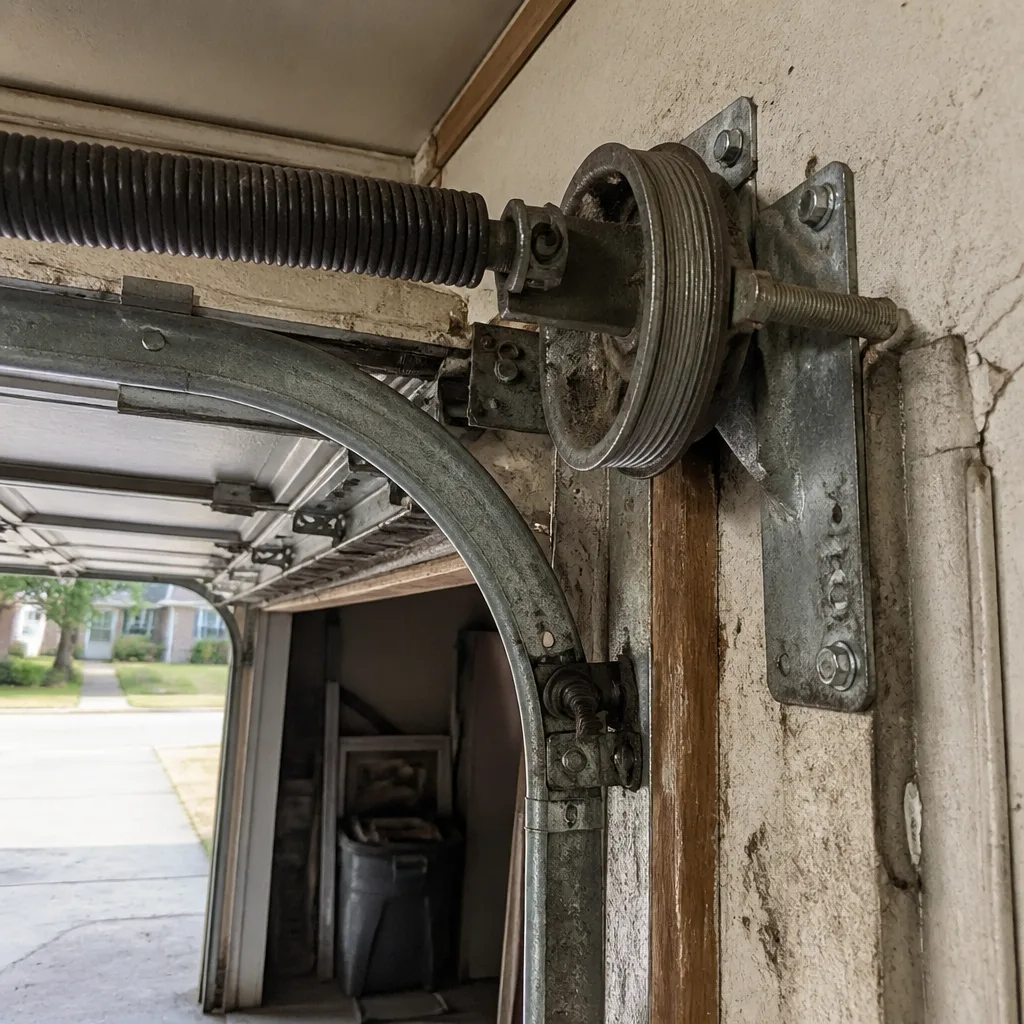 Before
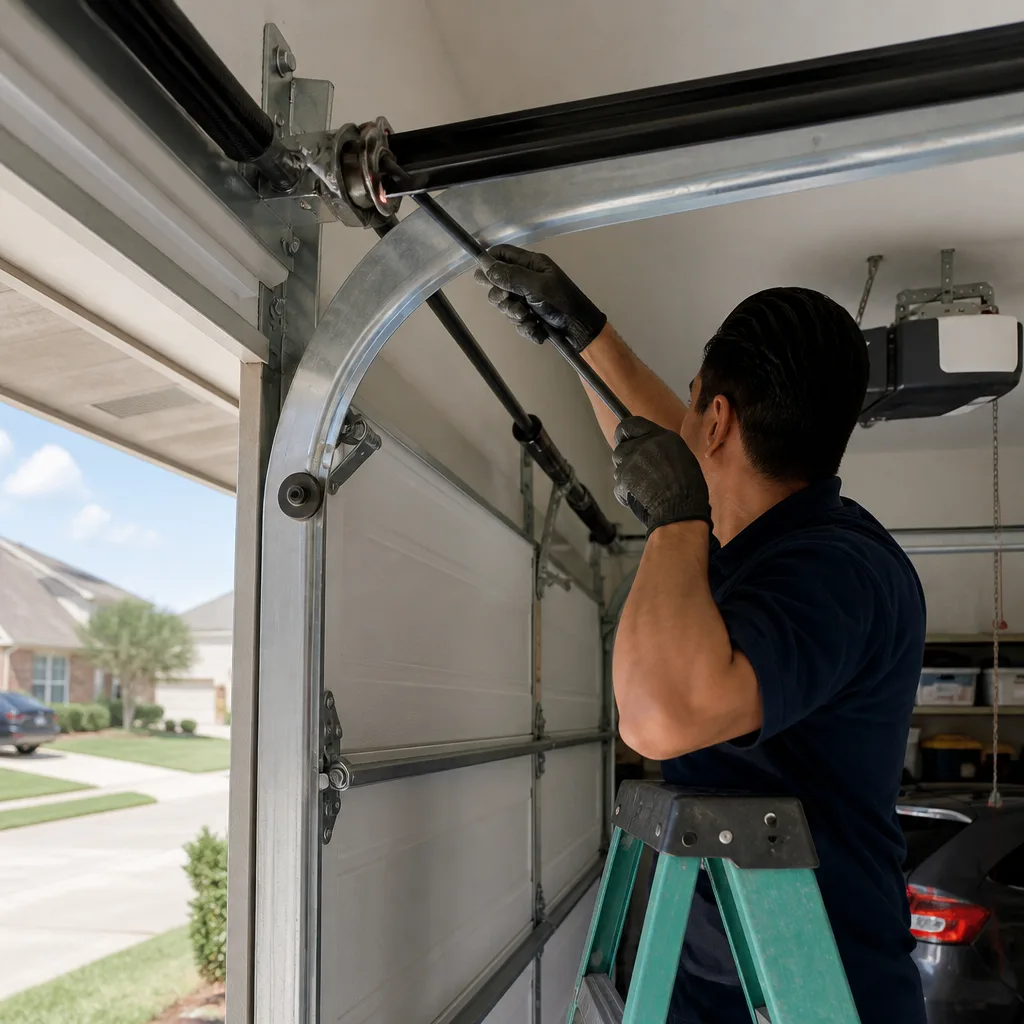 After
After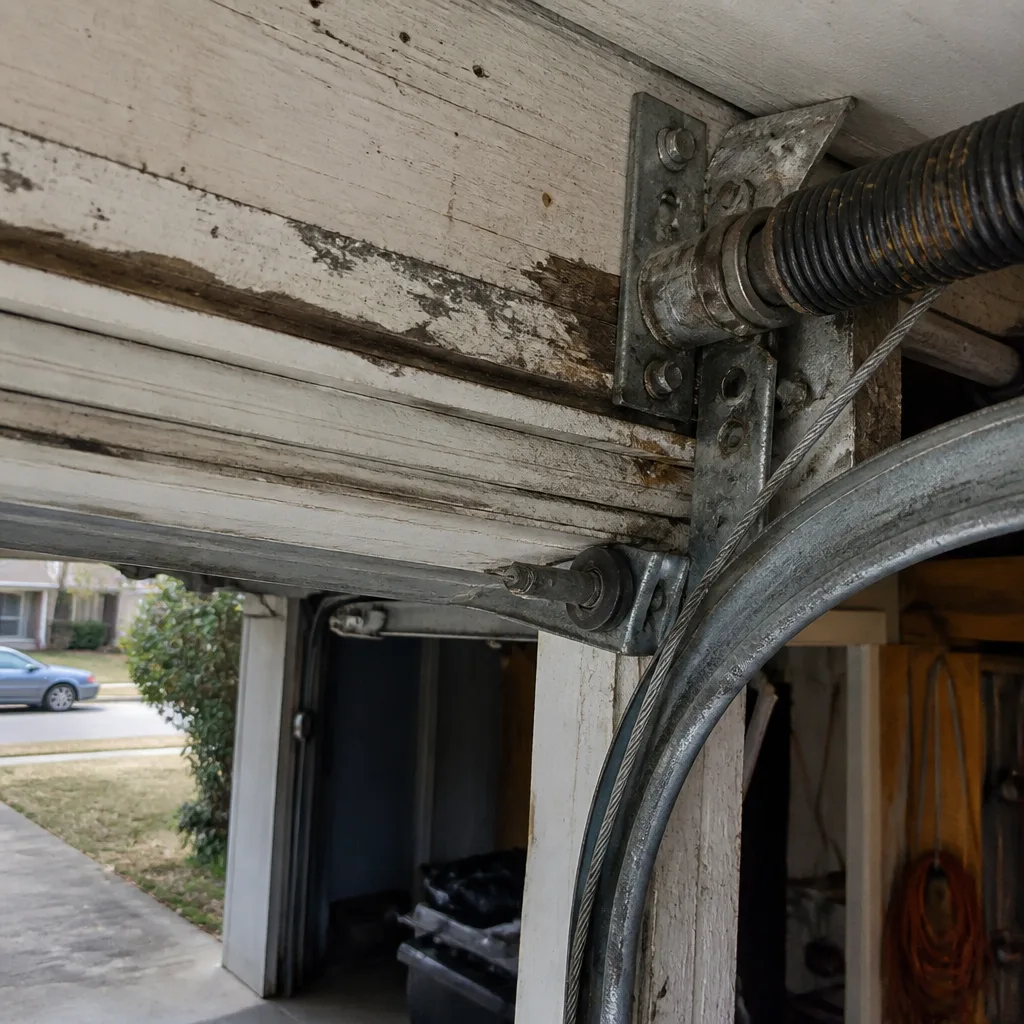 Before
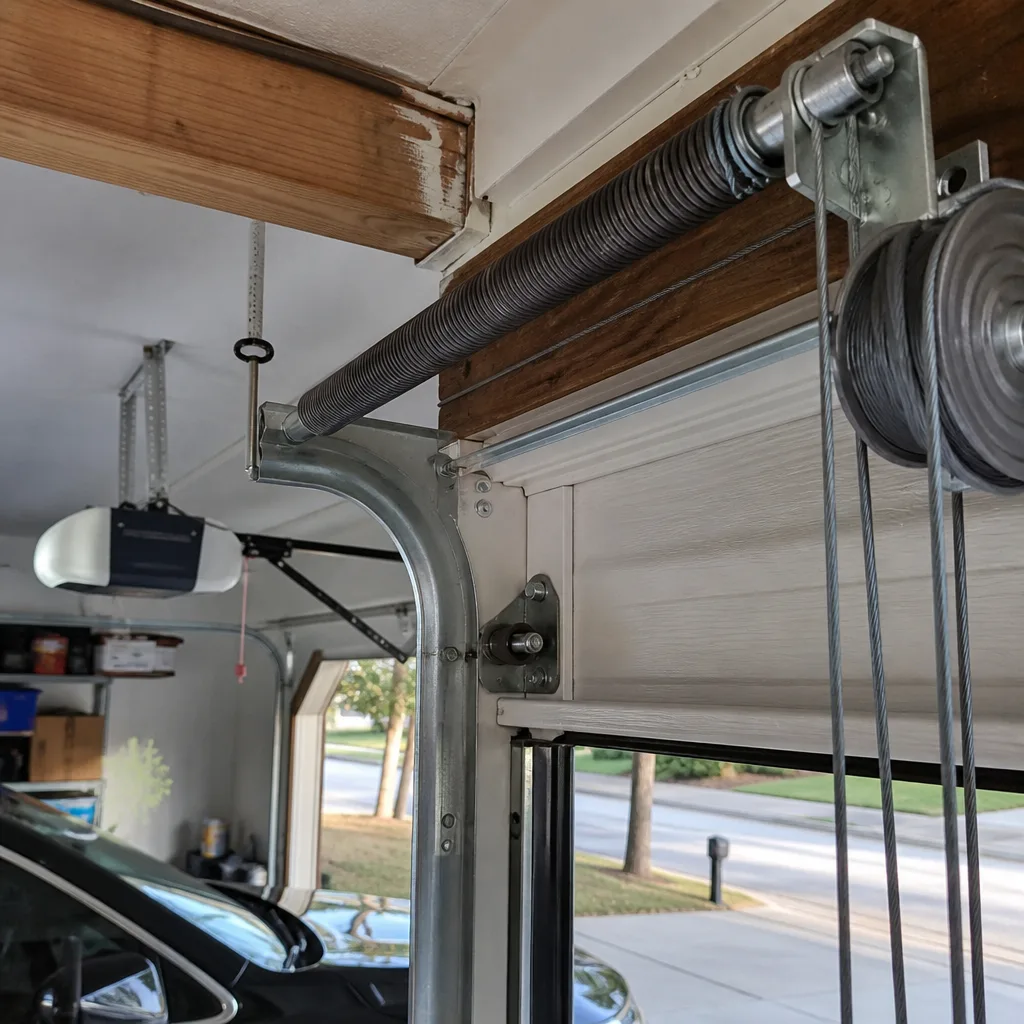 After
AfterGarage Door Permits, Codes & Inspections in TX: What You Need to Know
Most Pasadena homeowners don’t pull a permit for a replacement garage door, and for years nothing happens. Then they list the house, or a storm rolls through, and suddenly the city and the insurance company both want to see paperwork that doesn’t exist. The truth is that the City of Pasadena requires a permit for garage door replacement under most circumstances, while simple repairs and opener swaps usually don’t need one. And in Harris County, the wind-load requirements on that permitted door are stricter than what the base building code demands, because we’re in a hurricane zone and the county knows it. This guide walks you through exactly when you need a permit, what the inspector will check, what an unpermitted door costs you at resale, and how to stay square with both the city and your insurance carrier.
We’ve been installing and repairing garage doors in Pasadena since 2004, and we’ve helped hundreds of homeowners sort through this exact process. Here’s what you need to know, straight from the code books and the inspection reports, plus our more guides & resources.
Quick Answer
A replacement garage door in Pasadena, Texas generally requires a residential building permit from the City of Pasadena, and the new door must meet Harris County’s wind-load requirements for garage doors, which exceed the base International Residential Code. Simple repairs like spring replacement, panel repair, or an opener swap typically do not require a permit. The permit guarantees the work was inspected and meets current code, which matters when you sell the house or file a storm damage claim.
Table of Contents
- When the City of Pasadena Requires a Garage Door Permit
- Repairs, Openers, and Replacement: What Needs a Permit and What Doesn’t
- Harris County Wind-Load Requirements: Why They Matter for Your Insurance
- What a TDLR-Licensed Contractor Documents vs. What a Handyman Can’t Sign
- The Step-by-Step Permit and Inspection Process in Pasadena
- What an Unpermitted Door Costs You When You Sell the House
- What Inspectors Fail Most Often on Replacement Installs in Older Pasadena Homes
When the City of Pasadena Requires a Garage Door Permit
Let’s get straight to the actual municipal code, because there’s a lot of hand-waving online about “you probably don’t need one.” The City of Pasadena operates under its own adopted building codes, which follow the International Residential Code (IRC) with local amendments. Under the IRC, a garage door replacement is classified as an alteration to the exterior envelope of the structure, and the city requires a permit for that work when the door is being replaced, not simply repaired.
In Pasadena specifically, the rule we’ve seen enforced consistently is this: if you’re pulling out the old door and installing a new door slab and track system, you need a permit. If you’re replacing a broken spring, swapping out rollers, replacing a bent track, or changing the weather seal, you don’t. The line the city draws is whether the work changes the structural or wind-load performance of the opening. A new door is a different product with different engineering than the one that was originally installed, so the city wants to verify it meets current code.
There’s a practical reason this catches people off guard. Garage door companies, especially national outfits and one-truck operations, often tell homeowners “you don’t need a permit for that, we do these all the time.” And they’re not wrong that the job gets done without one, regularly. But that doesn’t mean the city agrees. What it means is the door got installed without an inspection record, and that record is what protects you later. In our experience serving Pasadena homeowners, maybe one in ten replacement jobs we see had a permit pulled on the previous door, which is one of the Garage Door Warning Signs: A Pasadena Homeowner’s Reference Guide we often discuss. That’s a lot of unpermitted work sitting in a lot of garages, waiting for a resale inspection to find it.
If you’re in a designated flood zone, which includes several neighborhoods in Pasadena near Vince Bayou and along the ship channel side of town, pay extra attention. Flood zone construction requirements under FEMA’s National Flood Insurance Program can layer additional documentation requirements on top of the standard building permit, and the city’s floodplain administrator will want to see that the door installation doesn’t alter the flood opening requirements of an enclosed garage. We’ll cover that more in the Harris County wind-load section, because these two issues travel together.
Repairs, Openers, and Replacement: What Needs a Permit and What Doesn’t
The confusion usually starts because a garage door “repair” and a garage door “replacement” sound like they’re on a spectrum, but to the City of Pasadena they’re different categories with different rules. Here’s the straightforward breakdown we give homeowners who call our shop in Pasadena:
Work that typically does NOT require a permit in Pasadena:
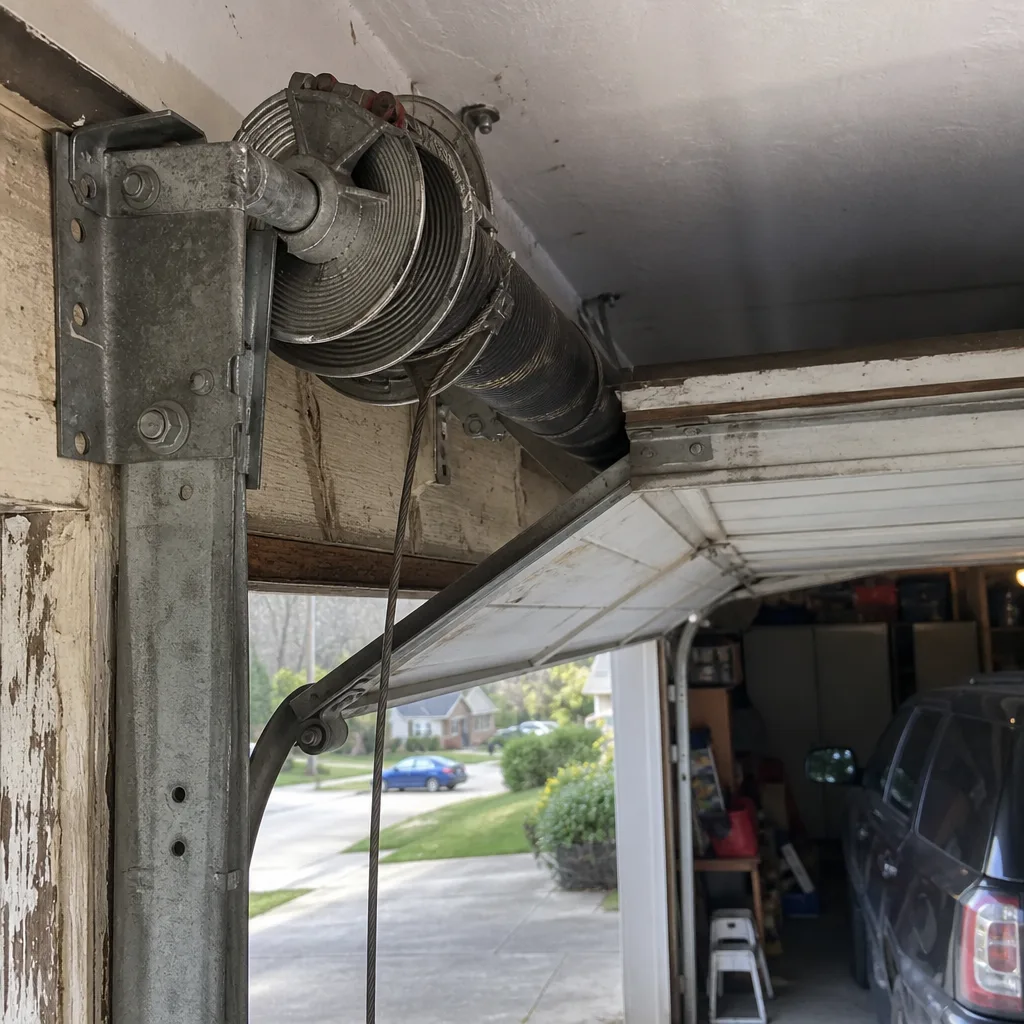
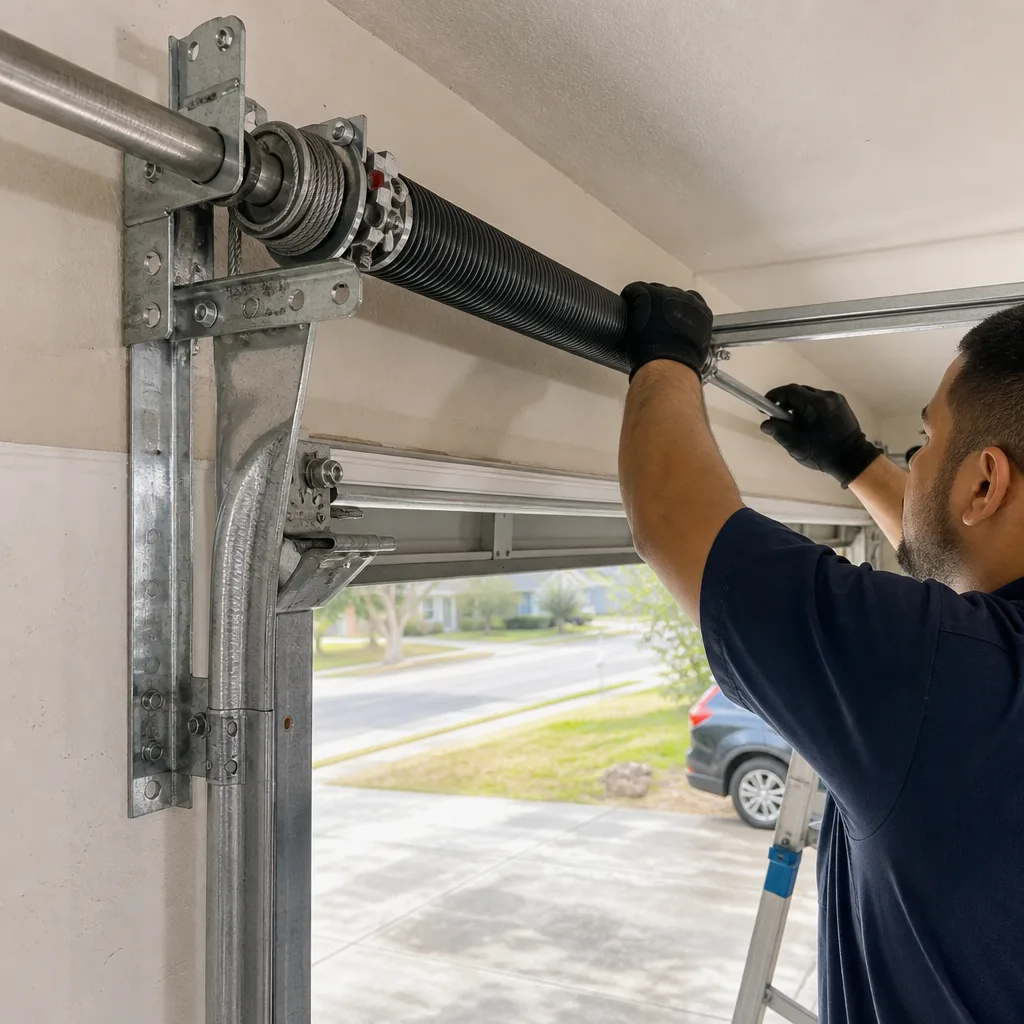
- Spring replacement, including torsion or extension springs, as long as the door itself stays put.
- Panel replacement, when one or two panels are swapped but the door system remains.
- Track, roller, hinge, or cable repair, as long as the door’s overall engineering isn’t changed.
- Opener replacement or installation, because an opener is classified as an appliance, not a structural component. This includes a new LiftMaster or Chamberlain unit, the same way you wouldn’t pull a permit to swap a dishwasher.
- Weather seal and insulation additions, which don’t affect the wind-load rating of the door.
- Safety sensor replacement and photo-eye realignment, which is maintenance, not construction.
Work that DOES require a permit in Pasadena:
- Full door replacement, meaning the old door slab and track come out and a new door goes in.
- Converting a single-wide door opening to a double-wide, or vice versa, because the structural header above the opening may need engineering review.
- Any modification to the rough opening, including widening, heightening, or reframing.
- Replacing a non-rated door with a wind-load-rated door in a flood zone, where the city and FEMA both want documentation.
The reason the city treats a door replacement as permit-worthy while a spring swap is not comes down to one word: wind load. A garage door is the single largest opening in a home’s exterior envelope, and in a hurricane zone, that opening is the first place wind pressure attempts to fail the structure. A door that’s not rated and anchored for Harris County’s wind zone can blow in during a storm, pressurize the garage, and lift the roof. That’s not a theoretical risk; it’s a documented failure mode in coastal Texas storms going back decades. The permit process exists so a building inspector verifies the door’s anchor points, wind-load rating, and installation before your family has to depend on it.
Harris County Wind-Load Requirements: Why They Matter for Your Insurance
Here’s the thing most garage door guides never tell you, and it’s the reason this guide exists: Harris County, including Pasadena, sits in a wind-borne debris region and a hurricane-prone region under the IRC. Your garage door has to be rated and installed to withstand design wind pressures that are higher than the stock rating on a standard residential door sold in, say, Dallas. If you buy a door off a shelf at a big-box store, it may not carry the wind-load certification your home’s location requires.
The specific requirement for Pasadena and most of Harris County is that garage doors be tested and labeled to meet ASTM E330 for wind load, and in many cases ASTM E1996 for wind-borne debris impact resistance. The exact rating depends on your home’s exposure category, which the city determines based on your lot. A home on an open cul-de-sac in the southeast part of Pasadena, with no windbreak for half a mile, is in a different exposure than a home tucked behind trees in a mature neighborhood near Strawberry Park. The door has to match the exposure.
What this means practically is that the door you install must carry a label or documentation showing its design pressure rating, and that rating must meet or exceed what’s required for your address. Manufacturers like Clopay, Amarr, and Wayne Dalton all make wind-rated doors for the Gulf Coast market, but not every door they sell carries the rating. You have to order it that way.
Why this matters to the average Pasadena homeowner comes down to insurance. A new garage door that doesn’t meet Harris County’s current wind-load requirements isn’t just a code violation. It’s a documented reason for an insurance carrier to deny a hurricane or hail damage claim, because the door wasn’t rated for the load it failed under. We’ve seen this happen after serious storms, and it’s a bitter pill: the homeowner paid for a new door, the door failed, and the insurance company denied the claim because the door wasn’t code-compliant for our wind zone. The garage door installation you choose matters, not just the door’s look.
For homes in designated flood zones, there’s one more layer: an enclosed garage must have flood openings that let water pass through the walls during a flood, so the hydrostatic pressure doesn’t shove the whole wall in. A new garage door doesn’t count as a flood opening, and if the door installation covers or alters existing flood vents, the city’s floodplain administrator will flag it. Keep those vents clear and documented.
What a TDLR-Licensed Contractor Documents vs. What a Handyman Can’t Sign
Texas doesn’t require a state license specifically for garage door installation in the way it licenses electricians and plumbers. But Texas does have TDLR, the Texas Department of Licensing and Regulation, and here’s where it gets real for your permit application: the City of Pasadena requires that work performed under a permitted job be done by a contractor who is registered with the city, insured, and able to pull the permit in their name. A TDLR-licensed or city-registered contractor can list their license number and insurance information on the permit application, which is why How to Hire a Garage Door Contractor in Pasadena: A Step-by-Step Guide matters before you start. A handyman working out of a pickup truck generally cannot.
What the contractor is legally required to document on a permitted door replacement includes:
- The manufacturer’s wind-load documentation for the specific door model installed, showing the design pressure rating and the testing standard (ASTM E330 or similar).
- The anchor and fastener schedule, meaning how the track was bolted to the jambs and header, and what fasteners were used.
- The door’s installation manual, retained as part of the permit record, so the inspector can verify the install matched the manufacturer’s engineering, not just the installer’s habits.
- Proof of insurance on file with the city, which protects the homeowner if something goes wrong on the job.
What an unlicensed handyman can’t sign off on is all of the above. They can’t pull the permit because the city won’t issue one to an unregistered person. They can’t produce wind-load documentation because they don’t order doors through manufacturers’ certified distribution channels. And if the inspection fails or the door fails in a storm, the homeowner is holding the bag because there’s no licensed entity on the record who said “this is code-compliant.”
At Otto’s Garage Door home, we carry our license and insurance documents in the truck, and Otto Reinhardt’s name is on the permit application. The name on the van is the name on the invoice and the name on the license. If the city inspector has a question about a wind-load label, Otto answers it. That’s the way it’s supposed to work.
The Step-by-Step Permit and Inspection Process in Pasadena
Here’s the full process, step by step, so you know what you’re signing up for when you pull a permit for a garage door replacement in Pasadena:
- Contractor submits the permit application to the City of Pasadena’s building department, either online or in person at City Hall on Southmore Avenue. The application includes the door’s wind-load documentation, the contractor’s license and insurance info, and the property’s legal description.
- Plan review, which for a straightforward door replacement is usually same-day or next-day, as long as the wind-load paperwork is clean. For flood zone homes or modified openings, the reviewer may route it to the floodplain administrator or a structural reviewer, adding a few days.
- Permit issued, and the door gets ordered. This is where the lead time matters: a wind-rated Clopay or Amarr door for a specific exposure category is often special-ordered, not stocked. Expect one to three weeks depending on the manufacturer.
- Installation day. The old door comes out, the new door goes in, and the contractor photographs the anchor points, wind-load label, and final install. Those photos get kept in the job file.
- Rough inspection, if required. Pasadena doesn’t always require a rough inspection for a simple door swap, but if the rough opening was modified, an inspector comes to look at the framing and anchors before the trim goes on.
- Final inspection. The inspector walks the job, verifies the door is properly anchored, checks that the wind-load label or documentation is on site, confirms the opener safety reversal system is functional, and signs off. This takes 15 to 30 minutes on a typical replacement.
- Final documentation. The city records the permit as closed, and the contractor provides the homeowner with the wind-load doc, the permit number, and the final inspection record. Keep these with your house file. You’ll want them when you sell.
The whole process, from application to final inspection, is typically 2 to 4 weeks for a simple replacement, with most of that being door manufacturing and shipping time. We’ve had permits get through the city office in under 48 hours and inspectors on site the same week we call for them. Pasadena’s building department is responsive when the paperwork is right.
What an Unpermitted Door Costs You When You Sell the House
This is the part most guides skip, and it’s the part that actually hits homeowners in the wallet years after the installation. Here’s how an unpermitted garage door replacement shows up during a real estate transaction in Pasadena:
When you sell, the buyer’s home inspector does a visual inspection and the title company pulls a permit history on the property. If the house was built in the 1970s and the garage door is a modern steel door with a recent-looking track system, an experienced inspector will note “garage door appears newer than home, no permit on record” right in the report. That note goes to the buyer, the buyer’s agent, and the lender. Now the door is a condition.
What happens next depends on the buyer and the lender, but we’ve seen three common outcomes:
- The city gets involved. The buyer or their agent calls the city, confirms there’s no permit, and the city issues a notice requiring the work to be permitted retroactively. That means an inspection of work that’s already buried, which often requires exposing anchor points or even replacing the door if it doesn’t meet current wind-load code.
- The lender pauses. FHA, VA, and conventional lenders all have appraisal conditions about unpermitted work that affects the structure or safety of the home. A garage door qualifies. The loan can sit in underwriting until the permit is resolved.
- The price drops. The buyer demands a credit for “unpermitted work remediation,” which in a Pasadena market where buyers have options, can be $1,000 to $3,000 off the sale price. That’s the cost of a permit, inspection, and door replacement all rolled into one, and the seller eats it because they can’t produce a paper trail that says the work was done right.
The cheapest permit in Pasadena costs less than a nice dinner for two. The most expensive unpermitted door can cost you the sale, or a few thousand dollars in concessions, or both. In our experience, it’s always cheaper to permit the job the first time. Otto would rather tell you that straight than show up five years later to fix a mess someone else created.
What Inspectors Fail Most Often on Replacement Installs in Older Pasadena Homes
Older homes in Pasadena present a specific set of challenges on garage door replacements, because the homes predate current wind-load code by decades. Here’s what city inspectors flag most often, based on what we’ve corrected across hundreds of permitted jobs, and what our Garage Door Repair Maintenance Checklist for Pasadena Homeowners covers in detail:
- Inadequate anchors. Older garage door openings were framed with whatever lumber was on hand in the 1960s, and the original door was secured with nails or light screws. Current wind-load requirements call for specific anchor patterns into the jamb studs and header, often including structural screws or through-bolts. If the original framing is rotted or undersized, the inspector fails the anchor inspection and the framing has to be reinforced.
- Missing or buried wind-load labels. Some installers remove the wind-load label because it’s “ugly,” but the inspector needs to see it. If it’s gone, the door is unverifiable, and unverifiable counts as non-compliant. This is a $50 mistake that can cost $500 to fix.
- Opener safety reversal out of adjustment. Even on a permitted replacement, the inspector tests the auto-reverse: a 2×4 under the door, the door should reverse on contact, and the photo eyes should reverse the door before it touches. Older homes with old opener wiring often have sensors that haven’t been realigned in years. It’s a simple fix, but a fail is a fail.
- Flood vents blocked by new trim. In Pasadena neighborhoods that are in or near flood zones, we regularly see replacement installs where the new door trim or bottom seal covers the flood openings in the garage wall. The inspector catches it immediately, and the fix requires cutting the trim back and restoring the vents.
- Door not rated for the exposure. Someone orders a stock door from a hardware store, and the inspector checks the documentation and finds it’s not rated for this exposure category. Now the door has to come out and a rated door has to go in. We see this a few times a year, always on jobs where the homeowner ordered the door themselves to “save money.”
These are the reasons the inspection step exists. It’s not bureaucratic rubber-stamping. It’s a second set of trained eyes on the largest hole in your house, in the wind zone where that hole matters most. A door is 200 pounds riding on two springs. Respect it.
Common Mistakes to Avoid
- Assuming repairs and replacements are treated the same. They aren’t. A new door is a permit job; a new spring is not. Mixing these up is the most common permit mistake we see in Pasadena.
- Buying a door online without wind-load documentation. A door that costs $800 less on a website may not be rated for Harris County’s wind zone, and the city will reject the permit on documentation alone. Then you have a door you can’t legally install.
- Letting a handyman talk you out of a permit. The handyman isn’t the one who loses three grand at closing when the unpermitted door shows up in the inspection report. You are.
- Covering flood vents with new trim or a taller bottom seal. In Pasadena flood zones, that’s an automatic inspection fail and a FEMA compliance issue on top of it.
- Throwing away the wind-load label after installation. The label is your insurance claim defense. Keep it with your house documents, in the garage, in a drawer with the deed and the water heater manual.
- Pulling a permit and not scheduling the final inspection. An open permit is worse than no permit when you sell, because the title company sees an incomplete job on record. Close the permit. Always.
When to Call a Professional
If you’re replacing a garage door in Pasadena and the words “wind load,” “permit,” or “exposure category” are new to you, call someone who works with this every week. A permitted door replacement involves ordering the right rated door for your address, submitting wind-load documentation to the city, installing to the manufacturer’s engineering, and standing in front of an inspector to defend the work. If the door you’re replacing is on a home built before current wind code took effect, the odds are high the rough opening needs anchor upgrades, the framing needs checking, or the door needs to be a special order, not a stock unit. This isn’t a weekend job, and it’s not a handyman job. It’s what Otto’s Garage Door does every day in Pasadena, and we’re glad to walk you through it. Call (346) 623-5419 for a free estimate, and we’ll tell you exactly what your house needs and what the whole job costs before anyone picks up a tool.
Frequently Asked Questions
Yes, a full garage door replacement in Pasadena requires a residential building permit from the City of Pasadena, because the new door must be verified to meet Harris County’s wind-load requirements. Simple repairs like spring or panel replacement do not require a permit. Call (346) 623-5419 and we’ll tell you which category your job falls into.
The permit fee for a garage door replacement in Pasadena is typically under $100, but the exact amount depends on the valuation of the work listed on the application. The bigger cost is the door itself when it’s wind-rated for Harris County. Otto’s Garage Door includes permit fees in our written quote, so the price you’re quoted is the price you pay, no surprises at the door.
Your garage door in Harris County needs to carry a wind-load rating that meets or exceeds the design wind pressure for your home’s exposure category, as determined by the City of Pasadena and documented under ASTM E330. Many doors sold at retail don’t carry this rating. A permit requires the documentation, so the rating has to be verifiable, not just claimed.
No, because the City of Pasadena requires the permit applicant to be a registered contractor with insurance and license documentation on file. A handyman without city registration cannot pull the permit, cannot produce wind-load documentation, and cannot sign off on code-compliant work. The homeowner ends up holding the liability for unpermitted work.
Yes, it will. Home inspectors flag doors that appear newer than the home with no permit on record, and title companies pull permit history as part of the closing process. An unpermitted garage door can delay closing, force retroactive permitting, or cost you $1,000 to $3,000 in seller concessions in the Pasadena market.
Yes, we handle the entire permit process on full door replacements in Pasadena, from the initial application to the final inspection, including all wind-load documentation. Otto Reinhardt’s name goes on the permit and the license, and he stands behind the work with the 90-Day Done Right Promise in writing on every job. Call (346) 623-5419 for a free estimate.
The Bottom Line
A garage door permit in Pasadena is cheap insurance against a very expensive problem. The permit is what verifies your door meets Harris County’s wind-load code, and that verification is what stands between you and a denied storm claim or a failed resale inspection. Most replacement doors in this area get installed without permits, and most of those will cause someone a headache eventually. Don’t be most. If you’re replacing a door in Pasadena, pull the permit, install a wind-rated door with a documented label, and keep the final inspection record with your house papers. It’s a few hundred dollars and a couple of weeks, and it’s the difference between a door that protects your house and a door that just looks like it does.
Written by Otto Reinhardt, Owner at Otto’s Garage Door, serving Pasadena since 2004.