
Last updated September 10, 2026
Full 25-point door and opener safety check with every visit - springs, cables, rollers, tracks, and your LiftMaster or Chamberlain opener included
You get a price before we start. It does not change when the truck arrives.
 Before
 After
After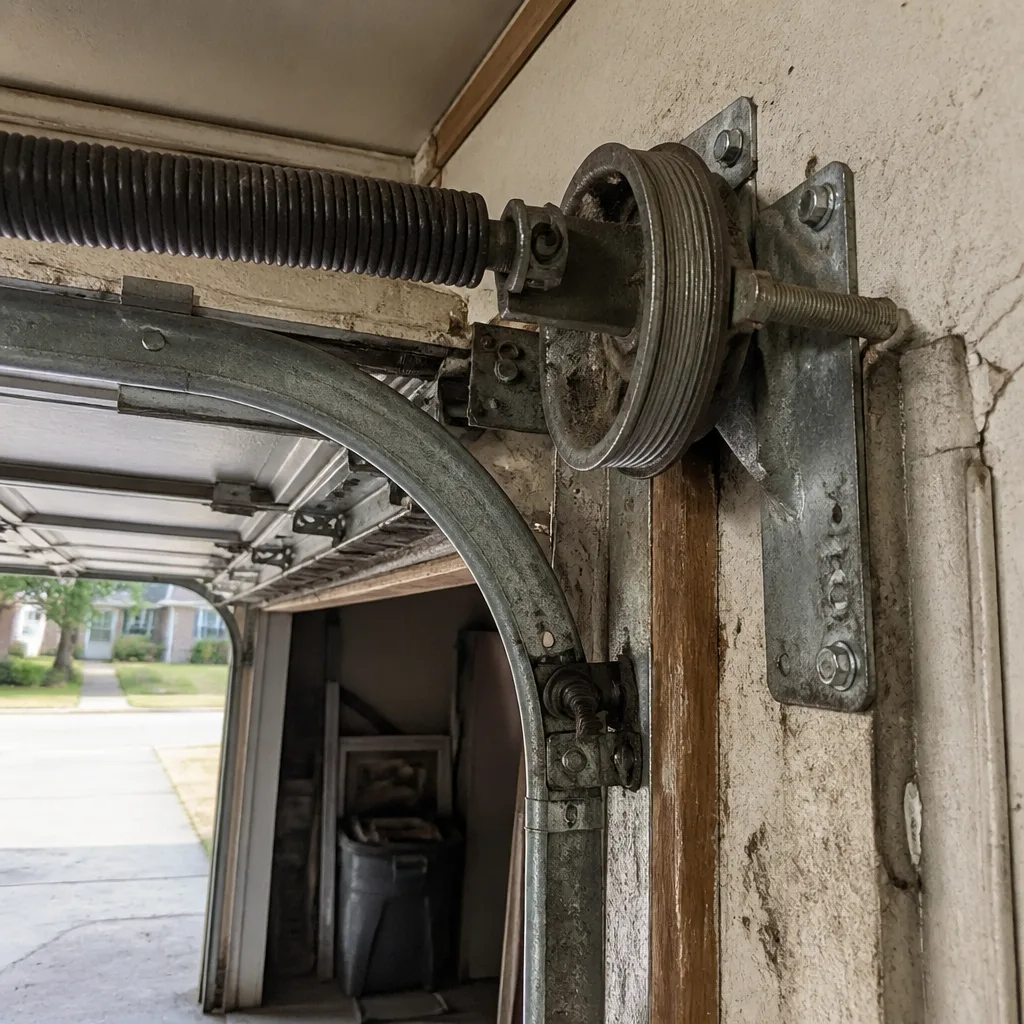 Before
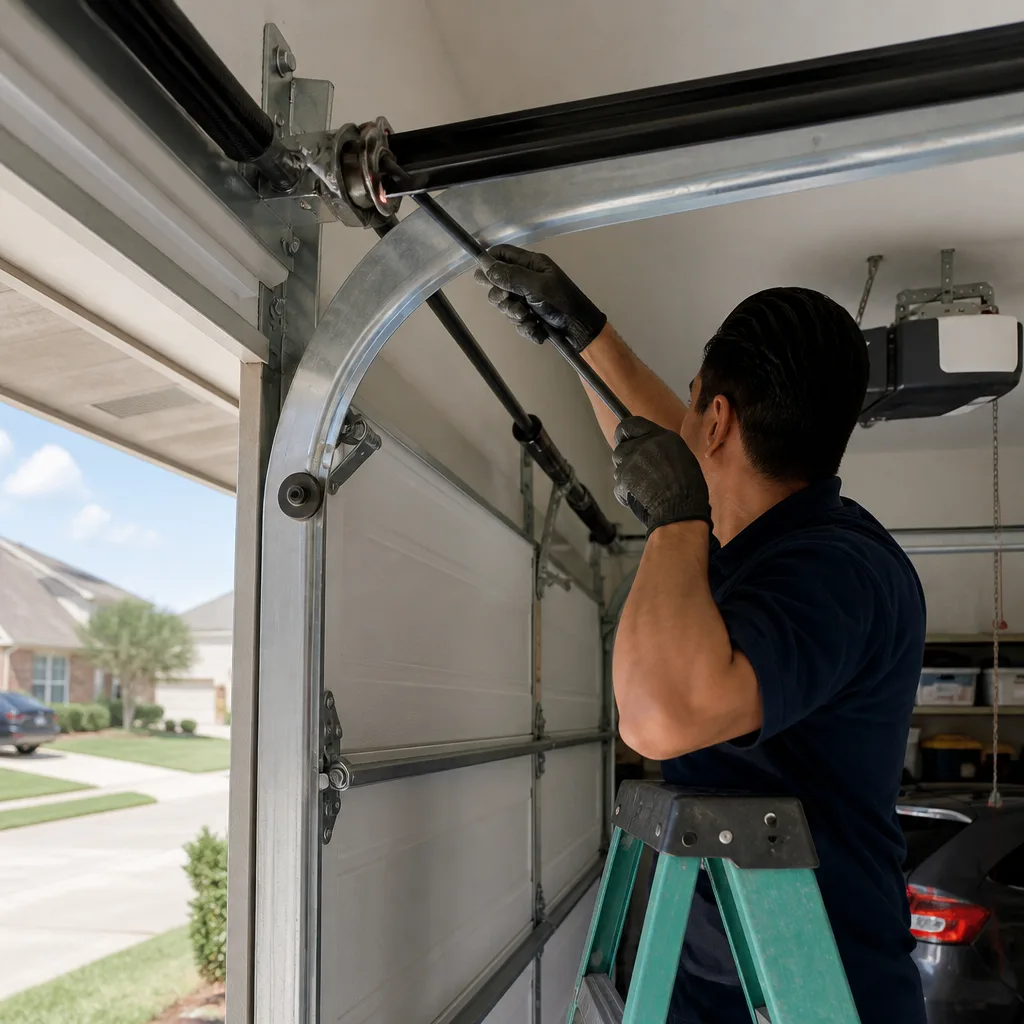 After
After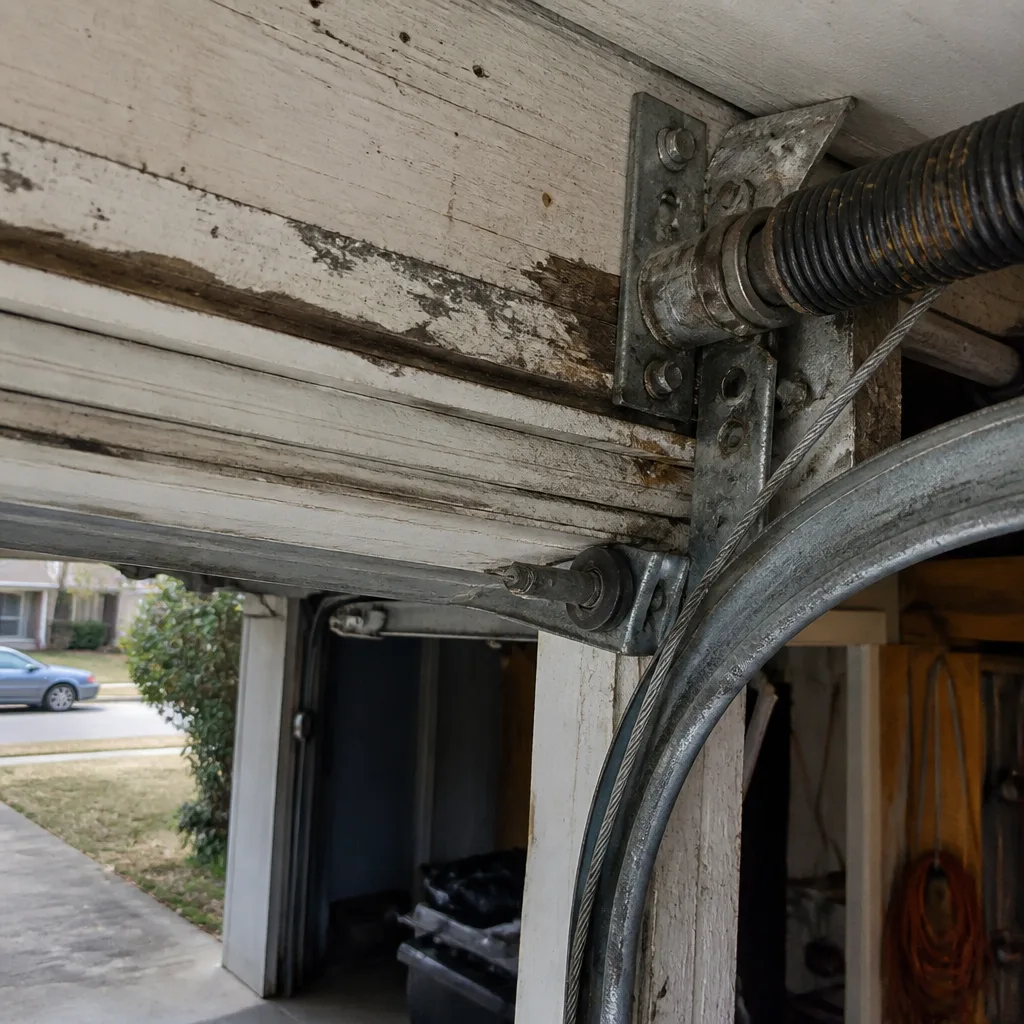 Before
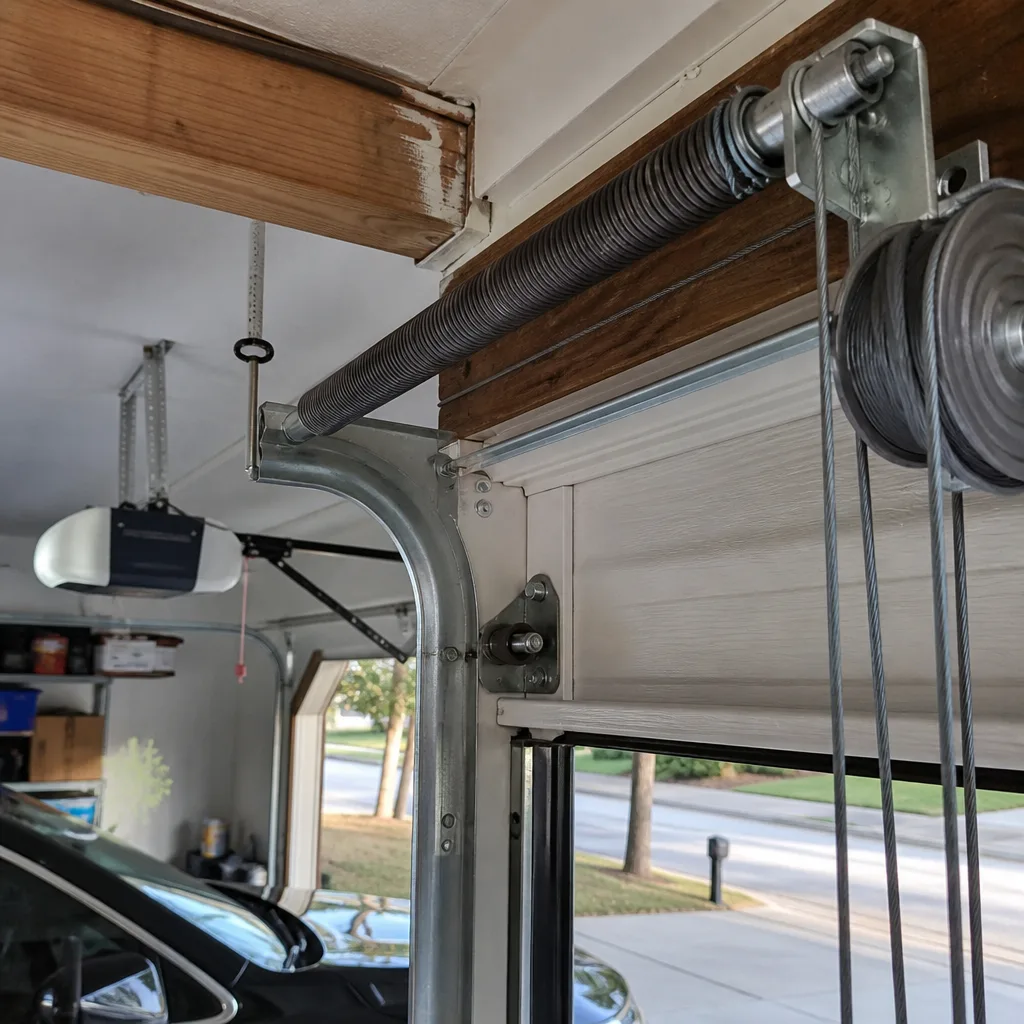 After
AfterHow to Hire a Garage Door Contractor in Pasadena: A Step-by-Step Guide
After a hurricane or big storm, storm-chaser garage door crews flood Harris County within 48 hours. Some roll into Pasadena with out-of-state plates, no local license, and a pitch built to collect a deposit before they disappear down Highway 225. The homeowners who get burned aren’t the ones who picked the wrong price. They’re the ones who never knew who they were actually hiring. This guide walks you through the five questions that separate a real local shop from a rebadged call-center operation, how to verify a Texas license in under two minutes, and what must be on your written scope of work before you sign anything. If you’re a homeowner in Pasadena, Deer Park, or La Porte, this is the twenty-minute read that saves you from a two-year headache.
Quick Answer
To hire a garage door contractor in Pasadena, verify their Texas license on the TDLR website, confirm they have a physical shop within Harris County rather than just a rented address, get a written scope of work with three specific items before signing, and ask whose name goes on the invoice. A legitimate local shop answers the phone with a real person, quotes the job on the call, and holds that price at your door. Otto’s Garage Door has been doing exactly that in Pasadena since 2004.
Table of Contents
- Step 1: Verify the Texas License on TDLR in Under Two Minutes
- Step 2: Ask Where the Physical Shop Is, Not Just the Address
- Step 3: Get a Written Scope of Work With Three Non-Negotiable Items
- Step 4: Read the Warranty Language Like a Contract, Not a Brochure
- Step 5: Spot Storm-Chaser Red Flags in the Pasadena, Deer Park, and La Porte Corridor
- Step 6: Compare Bids by Brand, Not Just by Bottom Line
- The Seven Questions to Ask Before Anyone Touches Your Door
- Your Hiring Checklist Before Signing
Step 1: Verify the Texas License on TDLR in Under Two Minutes
Texas requires garage door contractors to hold a license through the Texas Department of Licensing and Regulation, and verifying one takes less time than brewing coffee. Go to the TDLR website, click “License Search,” type in the company name or license number, and look at what comes back. If nothing comes back, hang up the phone. A garage door is 200 pounds riding on two springs. You don’t hand that job to someone who skipped the paperwork.
Here’s what you’re checking on the TDLR screen:
- Status says “Active.” Not “Expired,” not “Pending,” not “Inactive.” Active means the state says they can legally do the work today.
- The name on the license matches the name on the invoice. If the company you called is “Bob’s Doors LLC” but the license belongs to a different entity entirely, ask why. A legitimate shop doesn’t borrow licenses.
- Any complaints or enforcement actions are listed. TDLR posts disciplinary history. A clean record or a resolved complaint from 2012 is one thing. Three open complaints in the last eighteen months is another.
Most Pasadena homeowners never run this check because it sounds bureaucratic. It’s two minutes. I’ve been doing this since 2004, and I’ll tell you something that surprises people: the companies with the slickest websites and the biggest ad budgets are sometimes the ones with the thinnest licensing history. Meanwhile, the shop down the street with a hand-painted sign has been legally operating for twenty years. The TDLR database doesn’t care about marketing. It cares about who’s legal. Otto’s Garage Door publishes our license number on every estimate and every invoice, because you should verify it before the truck ever arrives, not after.
Step 2: Ask Where the Physical Shop Is, Not Just the Address
Here’s the question that exposes a lead-generation middleman in five seconds: “Where do you keep your trucks and your parts inventory?” Notice I didn’t say “What’s your address?” A call-center operation can rent a mailbox in Pasadena, list it on a website, and route your call to a contractor two counties away who’s never set foot in your neighborhood. The address is a decoy. The question is whether anyone actually works there.
A real local shop answers quickly and specifically. They say “We’re off Red Bluff near the Beltway” or “We have a warehouse on Spencer Highway.” They can tell you where their springs and openers sit on a shelf. A lead-generation operation pauses. They say “We serve the greater Houston area” or they give you a suite number that turns out to be a UPS Store.
Why does this matter for your garage door repair in Pasadena? Three reasons:
- A physical shop means parts on hand. If your torsion spring snaps on a Saturday morning, a local shop with inventory can fix it that afternoon. A middleman has to source the part, which means you wait, which means your car sits in the driveway and your house sits with a door that won’t close.
- A physical shop means someone answers for the work. If the job goes wrong, you want to stand at a counter and talk to a person, not navigate a phone tree in another state.
- A physical shop means local price knowledge. Shops that have worked Pasadena for years know what a spring replacement costs in this market, because they’ve bought springs from the same local supplier for a decade. A middleman guesses.
We’ve kept our shop local and owner-operated since 2004. The name on the van is the name on the invoice and the name on the license. When you call, the person who answers can tell you exactly where we are and exactly what we stock. That’s not a sales pitch. That’s what a garage door company in Pasadena should be.
Step 3: Get a Written Scope of Work With Three Non-Negotiable Items
A verbal quote is worth the air it travels through. A written scope of work is a contract, and it’s the difference between a $400 repair and a $900 “surprise” at the end of the job. Before you sign anything in Pasadena, your scope of work must include these three items. No exceptions.
- The exact work to be performed, itemized. “Replace broken torsion spring” is not sufficient. You want “Remove existing right-side torsion spring, inspect left-side spring and cables, replace right-side spring with [specific brand and cycle rating], lubricate all moving parts, test door balance.” Specificity is your protection. A vague scope invites a vague invoice.
- The total price, written as a firm number. Not “between $300 and $500.” Not “plus parts as needed.” A firm number, with the words “final price” or “total due” next to it. The price is quoted and agreed BEFORE any work starts. If a contractor won’t put a firm number in writing, find one who will.
- The warranty terms, in plain English. What parts are covered, for how long, and what happens if the fix fails in week three. “We warranty our work” is not a warranty. “Parts and labor covered for 90 days, one call brings us back at no charge” is a warranty. Otto’s Garage Door writes the 90-Day Done Right Promise on every invoice in plain language: if it’s not done right, we make it right. That’s the whole promise, and it’s been that way since 2004.
The three-item test is simple. If the scope of work doesn’t list the specific work, the firm price, and the warranty, don’t sign. I’ve seen too many Pasadena homeowners hand over a signature on a vague estimate and then argue with a phone number that doesn’t answer. A written scope keeps everyone honest, and it keeps the price where it was when the truck pulled up.
Step 4: Read the Warranty Language Like a Contract, Not a Brochure
Warranty language is where franchise locations and owner-operated shops part ways, and it matters most in year two, when something fails and you’re trying to get someone back to your house in Pasadena. A franchise offers a corporate warranty. That sounds reassuring until you read the fine print. “Covered under manufacturer’s terms” often means you’re mailing a claim to a processing center, waiting four to six weeks, and hoping the local franchisee feels like honoring it. The person who installed your door is an employee of a numbered entity. The person who processes the claim has never seen your house.
An owner-operated shop works differently. The warranty is backed by the same person who took your call, quoted your price, and showed up with the truck. If something fails in year two, one phone call brings Otto back, because Otto’s name is on the line, not a corporate brand. He’s been in this county since 2004. He’ll still be here in 2026 and 2028, because he isn’t transferred, reassigned, or relocated by a district manager.
Here’s the test. Ask a contractor: “If this fails in six months, who exactly do I call, and who exactly comes back?” A franchise says “our service department.” An owner-operated shop says “me, Otto. Here’s my direct line.” That difference is worth more than any warranty document. If you’re getting a garage door installation in Pasadena, the install itself lasts a day. The warranty relationship lasts years. Read the language with that in mind.
Step 5: Spot Storm-Chaser Red Flags in the Pasadena, Deer Park, and La Porte Corridor
Every time a hurricane or major storm hits the Gulf Coast, the same thing happens. Within 48 hours, Harris County fills with out-of-state crews in rented trucks, knocking on doors and offering “storm specials” on garage doors. Some are legitimate contractors who came to help. Some are not. The ones who are not have a pattern, and once you know it, they’re easy to spot.
The red flags specific to the Pasadena, Deer Park, and La Porte corridor:
- Out-of-state plates or no company markings on the truck. A legitimate local shop has a marked vehicle. A storm chaser often drives a rental with magnetic signs slapped on.
- They want a deposit before any work is scheduled. Local shops don’t take deposits for repairs. We quote the job, we do the job, you pay when it’s done. Anyone asking for 50% up front to “hold your spot” is either going to disappear or mark up the job once they’re on site.
- They can’t produce a Texas license on the spot. A licensed contractor has it in the truck or on the phone. A storm chaser has an excuse.
- The price is either unbelievably low or suspiciously high. Post-storm demand is real, but a legitimate Pasadena shop charges normal market rates and tells you the truth about lead times. If the quote is $99 for a spring replacement that normally costs $300, or $2,800 for a door that costs $1,600, that’s not a deal or a premium. That’s a red flag.
- They’re canvassing door to door. Reputable local shops don’t walk neighborhoods with clipboards. They’re too busy answering their own phones.
The storm-chaser problem is why the verification steps above matter. After a storm, you’re stressed, your door is damaged, and you want it fixed now. That’s exactly when the middlemen and the out-of-state crews profit. Take the two minutes to check TDLR. Ask where the shop is. And if the person on your doorstep can’t answer, tell them no.
Step 6: Compare Bids by Brand, Not Just by Bottom Line
When you get three bids for a garage door replacement in Pasadena, the temptation is to compare the numbers at the bottom of the page and pick the middle one. That’s a mistake, because a bid doesn’t just tell you the price. It tells you what you’re actually buying. See our DIY vs Professional Garage Door: The Pasadena Homeowner’s Decision Guide for help deciding who should do the work.
Ask each bidder to name the brand and the model. A door from Clopay or Amarr is a known quantity, with published specs, tested materials, and warranty support. A “builder-grade” door from an unnamed source might cost less on the invoice but more over five years in repairs, poor insulation, and premature wear. The same applies to openers. A Craftsman opener has a reputation you can look up. A no-name opener from an off-brand importer does not.
When you compare bids, compare these four things side by side:
- Brand and model of the door or opener. Not “standard door.” The actual manufacturer and model number. If the bid won’t tell you, the bid is hiding something.
- Labor included or separate. Some bids quote the door price and leave labor as a line item to be determined. That’s not a bid. That’s a starting point.
- Disposal of the old door. Is haul-away included? You’d be surprised how many Pasadena homeowners end up with a used door panel leaning against their fence because the “deal” didn’t include removing the old one.
- Warranty on parts and labor. Already covered above, but it belongs in the comparison too. A $200 difference in price is meaningless if one warranty lasts 90 days and the other lasts one year.
We install Clopay, Amarr, Wayne Dalton, and other established brands because Otto’s Garage Door has no interest in being the shop that saved you $150 on the door and cost you $400 on the follow-up. When we hand you a bid, the brand is named, the labor is included, the disposal is included, and the warranty is written on the invoice. Compare that against any other bid and the math gets simple.
The Seven Questions to Ask Before Anyone Touches Your Door
You’ve verified the license, confirmed the physical shop, and read the scope of work. Now, before the truck arrives, call and ask these seven questions. A legitimate local shop answers them fast and without hedging. A middleman stalls. A storm chaser hangs up.
- “Who exactly will be showing up, and what’s their name?” You want a name, not a dispatch number. When Otto’s Garage Door comes to your house in Pasadena, you know who you’re getting because the shop is local and the crew is small enough to name.
- “Are you licensed in Texas, and will you give me the license number?” A yes without a number is a no. The number should come immediately, and it should check out on TDLR.
- “Where is your physical shop located?” The answer should be a street, not a service footprint. If they can’t tell you where their trucks park at night, that’s an answer too.
- “Can you quote this on the phone and hold that price at the door?” For most repairs, a real shop can quote the job accurately over the phone because they’ve done a thousand of them in this area. If the price “depends on what we find,” ask what conditions would change it and by how much. A door is 200 pounds riding on two springs. The variables are knowable.
- “Is the price quoted and agreed before any work starts?” If the answer is yes, the price is the price. If the answer is “we’ll see how it goes,” call someone else. Otto quotes the job on the call and holds the number when he gets there. That’s standard practice for an honest shop.
- “What brands do you carry and install?” A real shop names them: LiftMaster, Chamberlain, Genie, Clopay, Amarr, Wayne Dalton, Craftsman, Raynor. A middleman says “we work with all major brands” and hopes you don’t ask which ones.
- “What happens if I’m not happy with the work?” The answer should be immediate and specific: “Call me, and I’ll come back.” Not “submit a ticket.” Not “contact customer care.” The person who answers should be the person who fixes it.
Your Hiring Checklist Before Signing
Take this checklist to the phone call. Every box checked means you’ve done more than 95% of Pasadena homeowners do. Every box unchecked is a reason to keep looking.
- TDLR license verified. Active, with the name matching the invoice, and no unresolved complaints.
- Physical shop confirmed. A street address in Harris County, with actual inventory, not a mailbox suite.
- Written scope of work received. Itemized work, firm total price, and plain-English warranty terms.
- Brand names documented. The door, opener, springs, and any parts are named by manufacturer, not “standard quality.”
- Price agreement confirmed. The number quoted on the phone is the number on the invoice, agreed before any work begins.
- Deposit refused. No reputable local shop asks for a deposit on a repair. None.
- Warranty in writing. Not a verbal promise. Written, on the invoice, with a specific duration and a specific person to call.
If you’re in Pasadena and you’ve run through this checklist with a contractor, you’ve already avoided the three most common ways homeowners get burned: the unlicensed operator, the call-center middleman, and the post-storm deposit scam. The remaining steps are simple: get the work done, test the door, and keep the invoice in a drawer. If you’re comparing quotes and want a baseline from a shop that’s been local since 2004, call Otto’s Garage Door at (346) 623-5419. Otto will quote the job on the call, hold that number at your door, and put the 90-Day Done Right Promise on your invoice in writing.
Common Mistakes to Avoid
- Hiring the first number that pops up in a search ad. The top spot on Google is bought, not earned. A national lead-generation company can out-spend every local shop in Pasadena and still have no idea where Red Bluff Road is. Scroll down and find the shops with a real address.
- Accepting a verbal quote. “I’ll take care of you” is not a price. If it’s not written, it didn’t happen. Get the scope of work, the total, and the warranty in writing before you sign anything.
- Skipping the TDLR check. It takes two minutes and it’s free. Skipping it is handing your garage door to a stranger on the honor system. The honor system doesn’t replace torsion springs.
- Believing a post-storm door knocker. After a major storm, legitimate contractors are busy with existing customers. The door knocker who happens to be in your Pasadena neighborhood with a truck and a “today only” price is not your lucky break.
- Comparing bids by total price only. A $1,200 door with no brand name and no disposal is not cheaper than a $1,500 Clopay or Amarr with haul-away and a written warranty. It’s just less honest about what you’re paying for.
- Not asking what happens in year two. The best predictor of your warranty experience is the answer to “who do I call in 18 months?” If the answer is a 1-800 number, expect a long wait. If the answer is “me, here’s my cell,” you’ve found a keeper.
- Paying a deposit before the work is scheduled. No legitimate Pasadena garage door company takes a deposit on a repair. If someone asks for money up front to “reserve the parts,” they’re either desperate or dishonest.
When to Call a Professional
Some garage door work is genuinely dangerous, and no YouTube video changes that. If a torsion spring has snapped, the cables are frayed, or the door is hanging unevenly in the tracks, the risk is not hypothetical. Torsion springs hold hundreds of pounds of tension, and when they release incorrectly, they can injure seriously. If the opener is straining and grinding, the problem is almost never the opener itself, it’s the balance of the door, which means the springs are doing extra work. If you see a gap in a spring, a snapped cable, or a door that won’t lift evenly, that’s the moment to stop and call someone trained. Otto’s Garage Door offers free estimates in Pasadena, call (346) 623-5419 and a real person will answer, day or night. We’ve been fixing garage doors in this county since 2004, and we’d rather tell you it’s a simple fix than watch you risk a hand on a spring.
Frequently Asked Questions
Go to the TDLR website, search the company’s name or license number, and confirm the license is active and matches the name on the invoice. The whole check takes under two minutes, and any contractor who won’t provide a license number should be rejected immediately.
Garage door spring replacement in Pasadena typically runs between $250 and $450 depending on the spring type and cycle rating, while opener replacement usually falls between $350 and $650 installed. Full door replacement starts around $1,200 for a basic steel door and runs upward from there with insulation and higher-end brands. Call (346) 623-5419 for an exact quote, and the price quoted on the phone is the price at your door.
Yes, a local shop with a physical inventory can often handle spring repairs and opener replacements the same day. Otto’s Garage Door answers the phone 24/7, even at nine at night when a spring lets go and your vehicle is sealed inside, and Otto quotes the job on that call and holds the number when he gets there.
The franchise routes your call through a national center, and the person who shows up is an employee of a numbered entity. An owner-operated shop means the person who answers, quotes, and works on your door is accountable to you and to the community, not to a district manager. When something fails in year two, you call the owner directly, not a customer-service queue.
No tip is expected, and payment method is your choice. What matters is that you receive a written invoice with the work itemized, the price firm, and the warranty in writing. If a contractor offers a cash-only price, ask for the same price on an invoice, and if it changes, that’s a red flag.
Yes, because it leaves your home unsecured and your vehicles trapped inside. A door stuck open exposes everything in the garage, and a door stuck closed often means a broken spring that won’t release. Call a licensed Pasadena shop with 24/7 live answering, and don’t force the door open by hand, you can make a mechanical problem into a structural one.
The Bottom Line
Hiring a garage door contractor in Pasadena comes down to verification, not vibes. Check the TDLR license. Confirm there’s a physical shop with real inventory. Get a written scope of work with an itemized job, a firm price, and a plain-English warranty. Ask whose name goes on the invoice, and make sure that person lives in your county and will still be here when the warranty needs to be honored. The five questions in this guide separate a real local shop from a rebadged call-center operation, and they cost nothing but ten minutes. If you want the short version: Otto’s Garage Door has been locally owned and owner-operated in Pasadena since 2004, the 90-Day Done Right Promise is written on every invoice, and the phone at (346) 623-5419 is answered by a real person, 24/7. Call for a free estimate, and you’ll get a straight answer and a firm price before the truck ever pulls up.
Written by Otto Reinhardt, Owner at Otto’s Garage Door, serving Pasadena since 2004.