
Last updated September 10, 2026
Full 25-point door and opener safety check with every visit - springs, cables, rollers, tracks, and your LiftMaster or Chamberlain opener included
You get a price before we start. It does not change when the truck arrives.
 Before
 After
After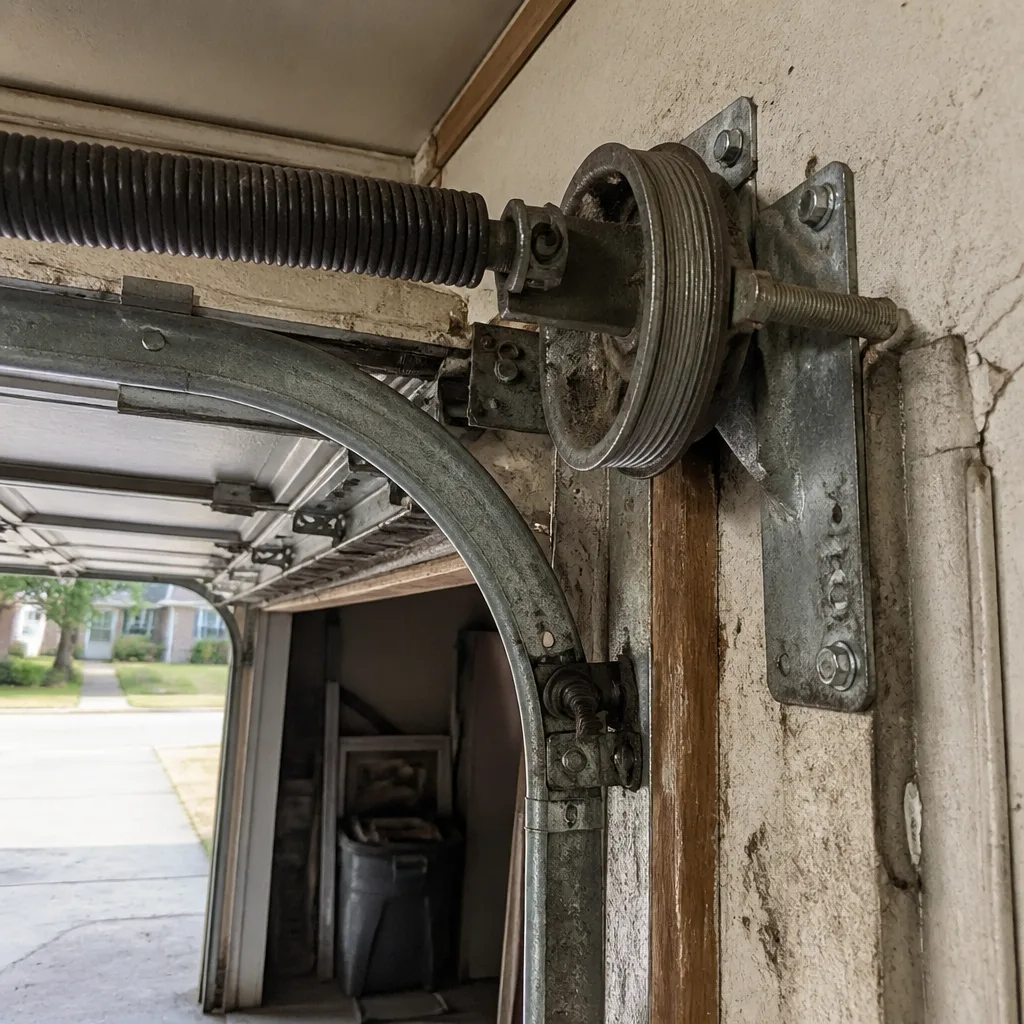 Before
 After
After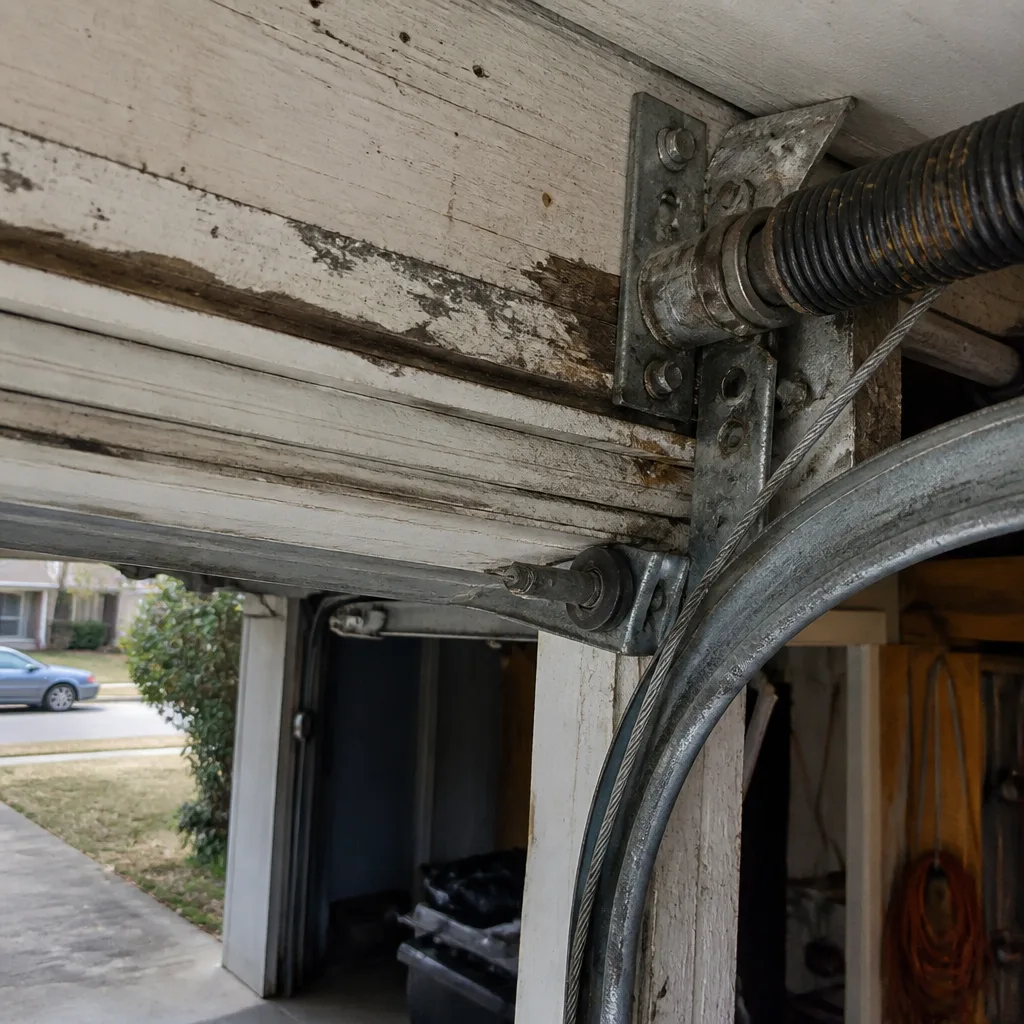 Before
 After
AfterGarage Door Warning Signs: A Pasadena Homeowner’s Reference Guide
By the time a torsion spring snaps in Pasadena, it has already been failing for weeks. You just didn’t know what the thin rust streak below the spring bracket was trying to tell you. Most garage door warning sign guides, including our Complete Guide to Garage Door in Pasadena, list the obvious stuff: loud noise, slow movement, a door that won’t open. But the signs that actually cost Pasadena homeowners the most money are the quiet ones that develop over six months of humidity exposure and get mistaken for normal wear. This guide covers those early signals, the ones you can catch on a Saturday morning before they turn into a Tuesday night emergency.
Quick Answer
The most reliable early warning signs of a failing garage door in Pasadena are thin rust streaks on torsion springs, a door that moves slightly slower than it did three months ago, visible gaps at the bottom corners when the door is closed, and a roller sound that has shifted from a squeak to a rattle. Any one of these is worth a closer look. All four together usually mean a repair is needed within a few weeks, not a few months.
Table of Contents
- Rust Streaks on Springs: Reading the Timeline
- Why a Slower Door Is the Most Under-Reported Warning Sign
- Bottom Seal Compression vs. Rot: What Pasadena Humidity Actually Does
- Roller Sounds: Squeak vs. Rattle vs. Grind
- Panel Bow and Corner Gaps: Foundation Settlement vs. Panel Damage
- Cable Fraying: What to Look For Without Touching Anything
- When the Opener Is Working, But Working Too Hard
- Track Gaps and Bent Rails: The Side-Eye Test
Rust Streaks on Springs: Reading the Timeline
Torsion springs on a garage door in Pasadena carry a consistent enemy: humidity. Not the dramatic kind that floods your driveway. The slow kind. The moisture that hangs in the air from March through October, condensing on cool steel in an uninsulated garage overnight, then evaporating by noon. That cycle, repeated a few hundred times, leaves a pattern on your springs.
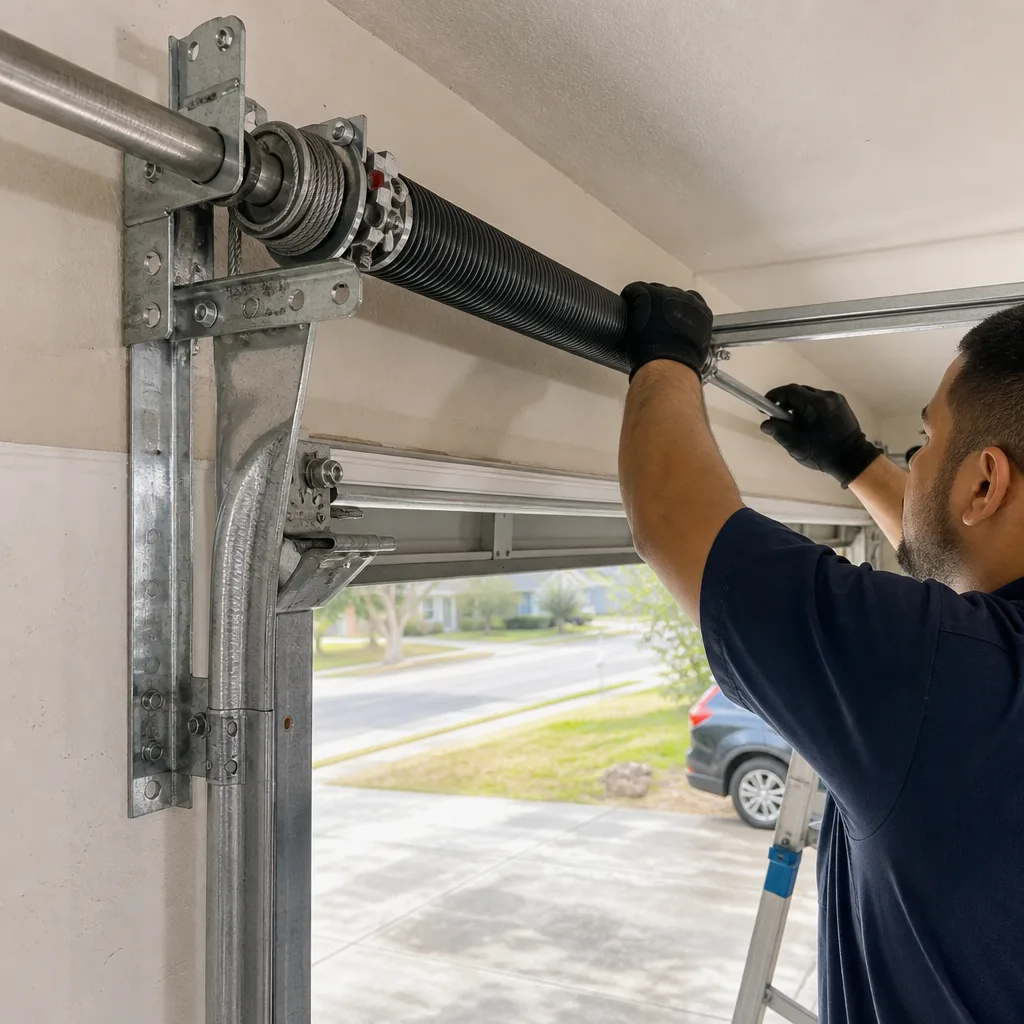
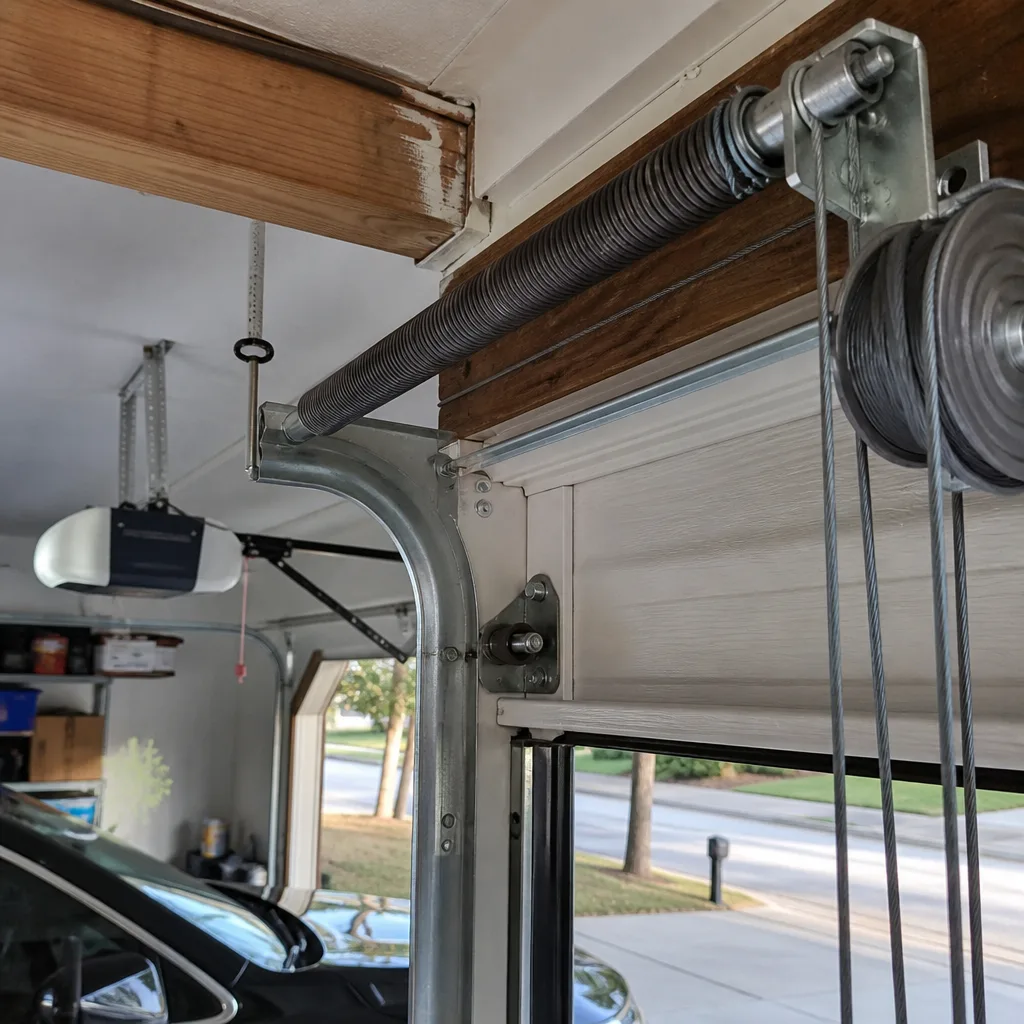
Here is what we have learned from thousands of service calls in this county. A thin, uniform layer of surface rust across the entire spring is normal for a spring that is five to seven years old. It looks like a dull orange film. It brushes off with a finger. That spring has years left. What you should actually worry about is a rust streak: a narrow, darker line that runs along or across the coil, often starting near the stationary cone or the winding cone at the end. That line means moisture has worked its way into a stress point, and the steel is oxidizing from the inside of that spot.
A spring with a rust streak near the center of its coil is a spring you should replace this month. The thin line means the coil has developed a weak point, and when a spring fails, it does not fail gradually from that point. It snaps all at once, usually while the door is under full tension, which means when the door is closed or opening. In Pasadena, we replace springs with rust streaks weekly. We replace fully snapped springs weekly, too. The difference is that the rust streak people call us at ten in the morning on a day they choose. The snapped spring people call at nine at night with a car stuck inside.
We count spring cycles the way you count tire miles. A standard torsion spring is rated for roughly ten thousand cycles, which for most Pasadena households works out to seven to ten years. But that rating assumes a dry environment. A humid garage shortens the effective life by a year or two. If your springs carry rust streaks at year six, treat that as normal wear on an accelerated schedule, not a premature failure. Every spring job from Otto’s Garage Door repair in Pasadena includes a cycle count conversation so you know what is left on your door, not just what broke today.
Why a Slower Door Is the Single Most Under-Reported Warning Sign
Here is a scenario we hear constantly: “The door opens, it just takes a bit longer than it used to.” The homeowner mentions it almost as an apology, like they are wasting our time. They are not. A door that is noticeably slower than it was three months ago is a door that is sending a specific message, and usually the message is about the lift mechanism, not the opener.
A garage door in good condition moves at roughly the same speed every cycle, year after year. When a door slows down, something has changed in the balance of the system. Most often, the spring has lost tension through normal cycle fatigue. As the spring weakens, the opener motor has to work harder to lift the same 200 pounds of door. That strain transfers to the opener gear and sprocket, which is typically plastic on residential models from LiftMaster and Chamberlain. The gear strips over time, and the repair bill expands from a spring replacement to a spring replacement plus opener gear work.
But the more dangerous consequence of a slower door is what happens on the cable side. When the spring weakens, the cables that wind and unwind around the drums at each end of the bar no longer carry equal tension. One cable goes slightly slack while the other carries extra load. That imbalance is what precedes a cable break. We see the pattern in Pasadena regularly: door slows down in month one, homeowner notices and does nothing, cable strands begin fraying in month two, cable snaps in month three. The door drops or jams mid-travel, and a 200-pound panel is now hanging on one cable and one spring. That is a dangerous door.
What should you do if your door feels slower? Watch it through one full cycle. Time it roughly. If the door used to rise in about ten seconds and now takes fifteen, that is not your imagination. That is a measurable change. Call a local garage door company and describe the slowdown specifically. A good tech will know to check spring tension and cable balance first, not hand you an opener price. We quote that service call on the phone and hold the price at the door. That is the way it should work.
Bottom Seal Compression vs. Rot: What Pasadena Humidity Actually Does
Bottom seals fail in two different ways. Knowing which one you are dealing with saves you money and keeps water out of your garage. In Pasadena, the humidity and the clay soil combine to make one of these failures far more common than the other, and it is not the one most guides talk about.
A compressed seal is normal. The rubber strip along the bottom of the door flattens over time, especially under a door that closes hard or gets parked on uneven ground. A compressed seal still does its job as long as it makes full contact with the slab. You can test it by closing the door and looking for daylight along the bottom from inside the garage with the lights off. No light means the seal is fine, even if it looks flat.
Rot is a different problem. In Pasadena’s humid months, water pools at the base of the door during heavy rain, and the bottom seal sits in that water. If the seal is made of older rubber, it absorbs moisture and begins to break down. The texture changes: it goes from smooth and resilient to chalky, cracked, or spongy. When you press on it, it stays indented. That is rot, and a rotted seal lets water migrate under the door and into the panel base. Water at the panel base is what starts panel rust and delamination. That is an expensive repair compared to a $30 seal.
The simple rule: compressed is okay, rot is not. If the seal feels chalky or stays dented when you press it, replace it before the rainy months arrive. If you are not sure, call Otto’s Garage Door and ask. We will tell you over the phone if it sounds like a seal replacement or something more serious, and we will not sell you a seal if yours is fine.
Roller Sounds: Squeak vs. Rattle vs. Grind, in Words You Can Actually Use
Garage door rollers make three distinct sounds, and each one means something different. Most guides tell you “squeaking means lubricate, grinding means replace.” That is half right. Let’s get specific, because the difference between a cheap fix and an expensive one is in the sound.
A squeak is a high-pitched sound, steady, like a gym shoe on a basketball court. That is a roller with dry bearings or a hinge that needs lubrication. The fix is a small amount of garage door lubricant on the roller stems and hinge pins. Not WD-40. That is a water displacer, not a lubricant. Use a white lithium or silicone spray made for garage doors, and do it while the door is closed and under no tension. A squeak that goes away after lubricating is a solved problem.
A rattle is different. A rattle is intermittent, metallic, and usually shows up when the door passes a specific point in the track. That is a roller with bearing play: the wheel is no longer round on its stem, or the stem is loose in the hinge. A rattling roller is about to fail. When it fails, the wheel can bind in the track while the door is moving, which throws the panel out of level and adds sudden load to the cables. We replace rattling rollers during routine service before they seize, because a seized roller at speed is a track-bender.
A grind sounds like something is chewing. Slow, low, with resistance. That is usually not a roller at all. That is the motor gear in the opener stripping, or a rail trolley that has run dry and is metal-on-metal. A grinding opener will eventually refuse to move the door. The door may work fine for weeks with a grind, until the gear loses its final teeth. If you hear grinding, check the model of your opener. Openers from Raynor and Craftsman often have replaceable gears, but on older LiftMaster units the cost of a new gear plus labor may be close to the cost of a new opener. We will tell you straight which one makes sense for your door.
Panel Bow and Corner Gaps: Foundation Settlement vs. Panel Damage
Pasadena sits on clay soil. Clay expands when wet and contracts when dry, and the cycle is intense here. That movement is hardest on concrete slabs, which can shift enough to change the shape of the garage opening. When the slab moves, the door no longer meets the ground evenly, and gaps appear at the corners. This is foundation settlement, and it is common in Pasadena neighborhoods built before 1990.
Here is how to tell foundation settlement from panel damage. Look at the gap with the door closed. If the gap follows a consistent line where the door meets the floor and is wider at one corner than the other, the issue is almost always the slab, not the door. The door panels themselves are straight. The floor is not. The fix is a bottom seal adjustment or, in more extreme cases, a door leveling job. That is a garage door repair, not a foundation repair.
Panel bow is different. A bowed panel curves outward or inward in the middle of the door, visible when you stand back and look at the door from the street. That is panel damage, usually from a door that was operated with broken springs or from a vehicle bump. A bowed panel does not seal correctly even when the door is fully closed, and it puts stress on the hinges between that panel and the one above it. The fix is panel replacement, which is worth doing quickly: a bowed panel that gets ignored eventually takes the hinges with it, and you go from replacing one panel to rebuilding a section of the door.
We have enough Pasadena foundation-settlement calls in our history to know this distinction quickly, and we will tell you if the gap is a door problem or a concrete problem before we touch anything. If you are looking at a bow or a corner gap and want a straight answer, garage door installation experts in Pasadena can assess it in one visit.
Cable Fraying: What to Look For Without Touching Anything
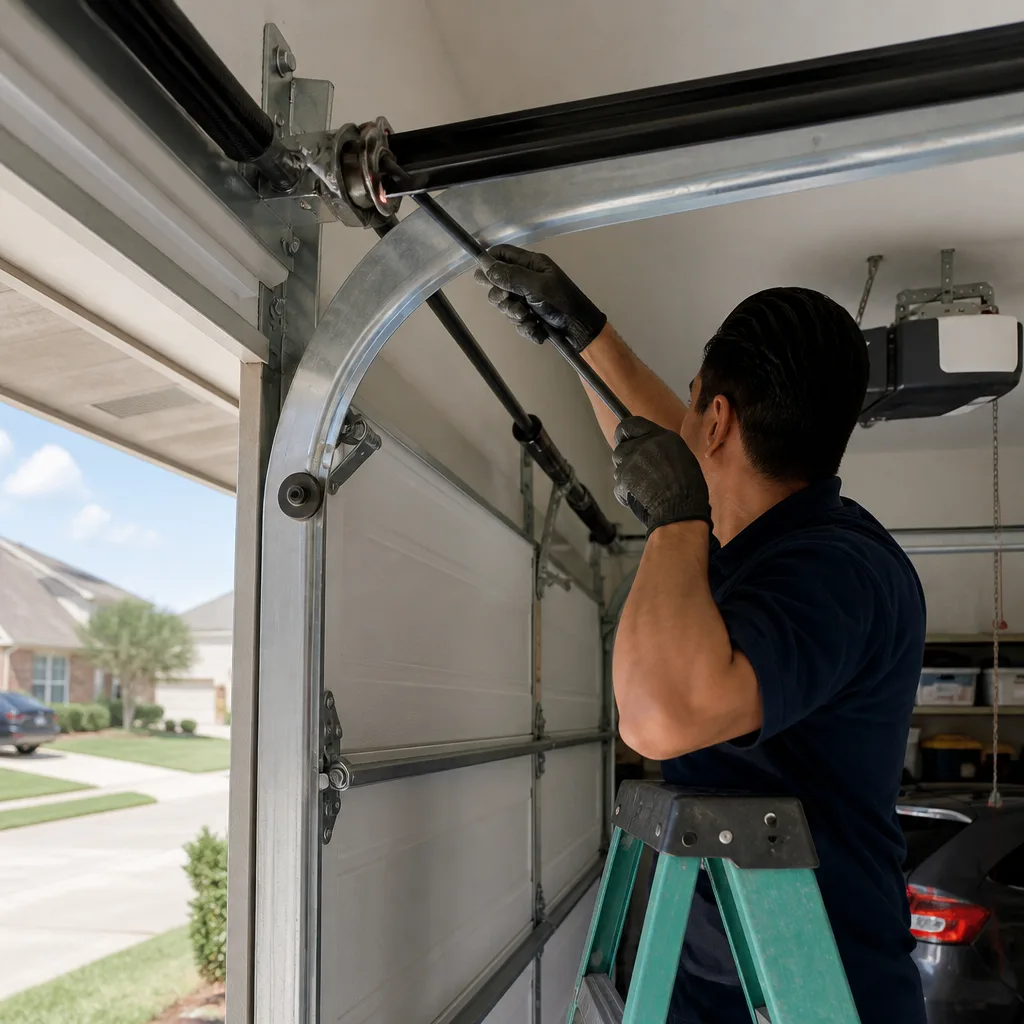
The lift cables on a garage door are under the same tension as the springs they support. You should not touch them, adjust them, or remove them. Garage door cables carry enough force to remove fingers or break bones when they release. All inspection is visual and from a distance.
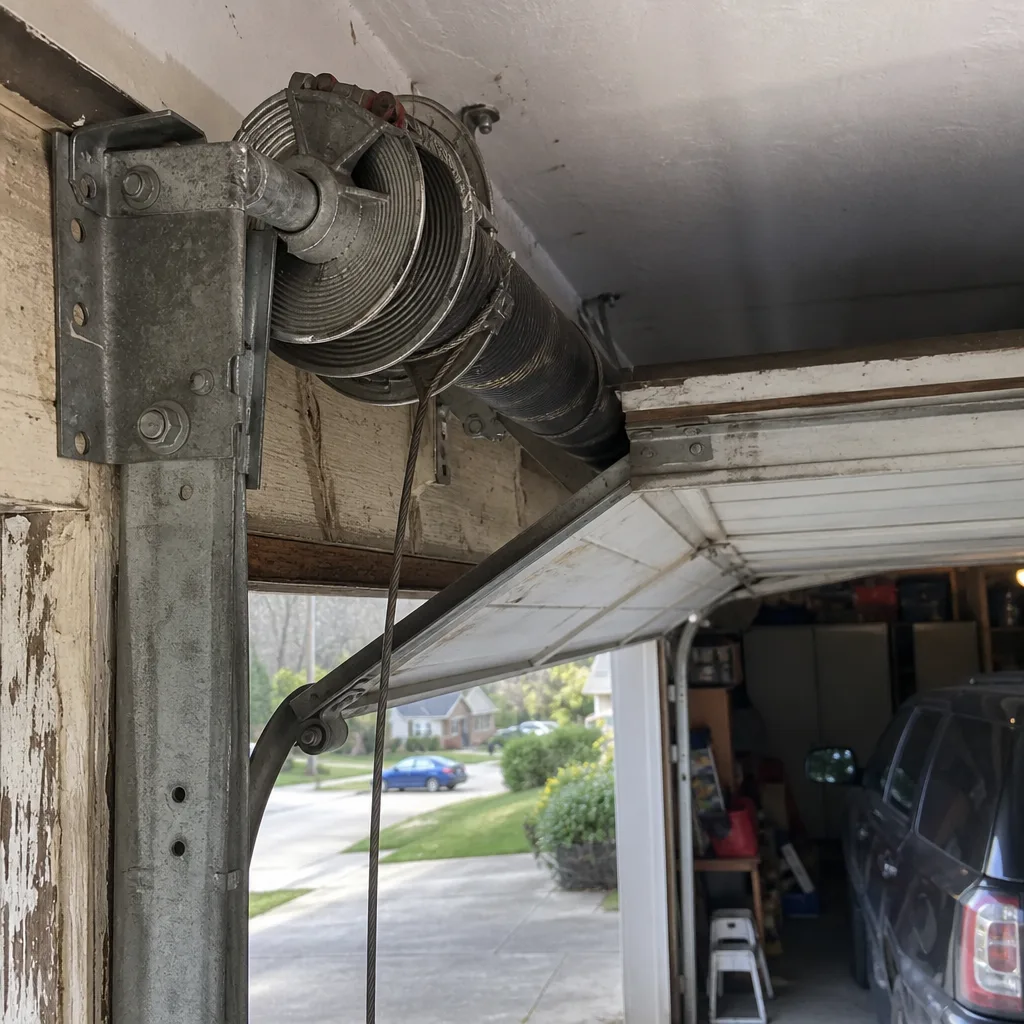
What you are looking for is simple: the cable should look smooth and solid, not fuzzy. A cable that is beginning to fail will show broken strands near the bottom fixture or where the cable wraps around the drum at the top of the bar. The break usually starts near the bottom, where moisture and rust from a wet garage floor concentrate. If the cable looks fuzzy or you see individual wires sticking out from the main cable body, that is a cable that is days or weeks from failing. Not months.
The second thing to look for is a gap between the cable and the drum. When the door is closed and the spring is under tension, the cable should sit tight in the drum groove. If you see slack, or the cable has jumped the groove and is riding against the drum flange, that is a serious problem. A cable off the drum changes the balance instantly, and the door will not open evenly. The panel will start to rise at an angle, bind against the track, and potentially fall if the other cable gives way.
Cable inspection is one of those things that takes an experienced eye about thirty seconds. It is part of every garage door tune-up we do in Pasadena, and we would rather catch a fraying cable during a scheduled visit than at nine o’clock on a Sunday night. If you suspect cable issues, call us. Do not try to fix cables yourself. A door is 200 pounds riding on two springs. Respect it.
When the Opener Is Working, But Working Too Hard
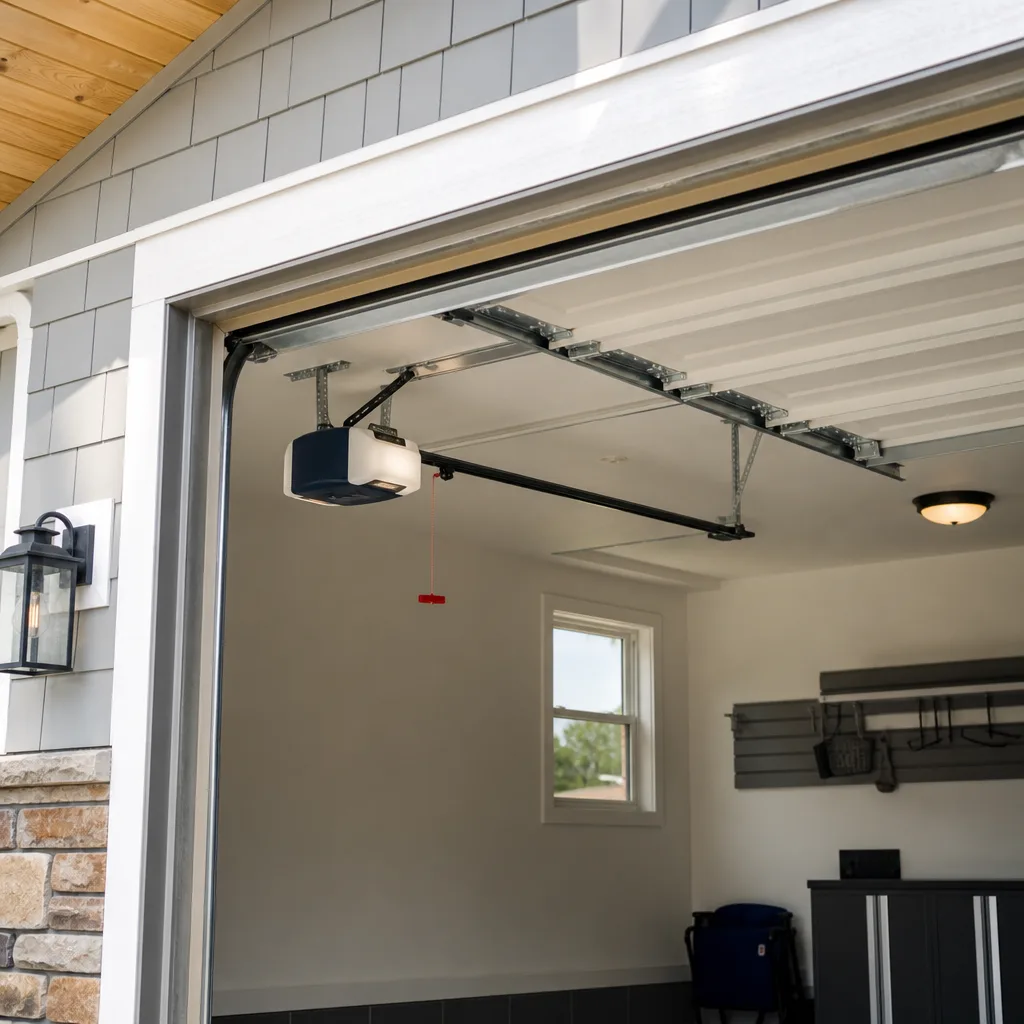
The opener gets blamed for everything. And most of the time, the opener is innocent. If the opener is straining, the problem is almost never the opener. The opener is the motor; the work is done by the springs, cables, rollers, and track. A properly balanced door can be opened by hand with a few pounds of force. The opener is just automating that action.
When a door is hard to lift, the opener motor strains to compensate. You will hear it: the motor pitch drops, the travel speed slows, and the rail vibrates. Homeowners often assume the motor is dying. They go to a big box store and buy a new opener, install it, and the new opener strains exactly the same way. The problem was never the motor. It was a spring that lost tension, a roller that seized, or a cable that was about to go.
Before you replace an opener, test the door. Pull the release cord and open the door by hand. It should lift smoothly and stay open on its own about three-quarters of the way up. If the door is heavy, shifts to one side, or slams down when you let go, the problem is balance, not motor. Fix the balance and the opener works like new. That is a cheaper fix than an opener swap in most cases.
This is the most common money-saving realization our Pasadena customers have on a service call. They call us for an opener repair or replacement, and we find a door that needs a spring adjustment. We quote them the actual work and tell them to save their opener. If you want to know whether your opener is the problem or the door is the problem, garage door opener service in Pasadena will give you a straight answer, not a sales pitch.
Track Gaps and Bent Rails: The Side-Eye Test
Garage door tracks are steel channels that guide the rollers on each side of the door. They are bolted to the wall and hung from the ceiling, and they need to stay in a straight line. When a track is bent, the door tells you in small ways before it tells you in a big one.
The side-eye test is exactly what it sounds like. Stand at the back of the garage and look down the length of the track on each side. Squint like you are lining up a pool shot. The track should be one continuous straight line, or with a smooth curve where it transitions from vertical to horizontal. A bent track shows up as a kink: a point where the line breaks and angles away from the wall or ceiling. Often you can see it from the side as a small bow or a spot where the track is closer to the wall than at the bolts.
The cause is usually an impact. A car bumper, a ladder, a kid’s bike. Or it is corrosion at the bolt holes, which is more common in Pasadena’s humid garages. When the track bolt rips through a rusted hole, the track shifts out of line. The door begins to rub, the rollers bind, and eventually the door binds so hard the opener refuses to move it.
The fix depends on the condition. A minor bend can sometimes be straightened. A rusted bolt hole requires a repair plate or a track section replacement. Neither is a big job if you catch it early. A track that has been binding for a year wears out rollers and stresses the hinges, and the bill grows. The side-eye test takes ten seconds. Do it twice a year. If you see a bend and want a second opinion, call us in Pasadena. We will tell you if it needs attention now or if it can wait.
Common Mistakes to Avoid
- Lubricating a grinding roller. A roller that grinds is not dry; it is destroyed. Lubricant will not fix it, and using lubricant on a failing roller gives you false confidence while the damage continues. Replace the roller before it seizes.
- Replacing the opener without testing the door balance. This is the most expensive mistake in garage door maintenance. If the door is heavy when you pull the release cord, a new opener will not fix it. Fix the balance first.
- Ignoring a slower door. Slowness is not normal wear. It is a measurable change that signals spring fatigue or cable imbalance. The longer you wait, the more parts fail.
- Treating all bottom seal wear as normal. A compressed seal is fine. A rotted, chalky seal is letting water into your panel base. The difference in repair cost is hundreds of dollars.
- Painting over rust streaks on springs. Paint hides the visual signal but does nothing to the internal oxidation. The weak point is still there. A painted spring that snaps still snaps.
- Waiting until the door will not open to call. By the time the door refuses to move, several smaller failures have already happened. Money spent on early repairs is always less than money spent on emergency repairs, especially on a Saturday night in Pasadena.
- Trying to replace cables or springs yourself. The tension on a torsion spring system is genuinely dangerous. Every year, homeowners end up hurt attempting DIY spring work. This one is worth hiring out, every time.
When to Call a Professional
Some garage door issues are fine to watch and wait. Others are not. Call a professional immediately if you see a rust streak on a torsion spring, a fuzzy or frayed cable, a roller that rattles or grinds, a door that drops any distance when you release it by hand, or a cable that has jumped the drum. These are failures in progress, and any one of them can turn a working door into a 200-pound falling panel. Do not attempt spring or cable work yourself, even if a video makes it look easy. The tension in a garage door system is not something to learn on your own door. Otto’s Garage Door offers free estimates in Pasadena. Call (346) 623-5419 and a real person will answer, quote the visit honestly, and tell you if the fix is urgent or if it can wait.
Frequently Asked Questions
A spring about to break will show rust streaks on the coil, especially near the center or near the winding cone. The door will also feel heavier when you pull the release cord, and the opener will sound strained. In Pasadena, springs typically last seven to nine years with normal use. If your springs are over seven years old, have them inspected even if they look okay. A broken spring is a preventable emergency. Call (346) 623-5419 for a free spring inspection.
A slow garage door is a significant warning sign. It usually means the spring has lost tension, which forces the opener to work harder and causes uneven cable wear. The longer a slow door is ignored, the more likely a cable break becomes. A five-second difference in travel time is enough to justify a call. We quote on the phone and hold that price at the door.
A healthy garage door is quiet enough that you do not notice it. You should hear a smooth rolling sound, like a shopping cart on clean wheels. You should not hear squeaks, rattles, grinds, or bangs. A squeak suggests lubrication is needed. A rattle suggests a roller is failing. A grind suggests opener gear or rail damage. Each sound has a specific fix, and a trained ear can usually diagnose it over the phone.
Garage door spring replacement in Pasadena typically runs between $200 and $450 depending on the spring size, door weight, and whether it is a single or double spring system. That price includes the springs, labor, and a balance check. We quote the exact price on the phone before we arrive, and that number does not change at the door. Call (346) 623-5419 for a firm quote on your door.
No. We quote the job on the phone based on the details you give us, and we hold that number when we arrive. If we find additional work needed, we show you what we found and quote the additional work separately before doing anything. You approve every dollar before we start. That is the way Otto has run this company since 2004.
Yes. Our trucks carry the most common springs, cables, rollers, hinges, and opener parts for all major brands, including LiftMaster, Wayne Dalton, and Craftsman. Most repairs in Pasadena are finished on the first visit. If your door needs a part we do not have, we tell you before the visit and schedule a return that works for you.
The Bottom Line
Garage doors in Pasadena fail in patterns, and the patterns are readable. Rust streaks on springs, a door that moves slower than it did, a seal that stays dented when you press it, a rattle at a specific point in the track: these are the quiet warning signs, and they are the ones that cost homeowners the most when ignored. The fixes are usually small when caught early: a seal, a roller, a spring replacement. For more guides & resources, visit our blog. The consequence of ignoring them is a snapped spring on a Sunday night with the car stuck inside. If any of these signs sound familiar, call (346) 623-5419. We will tell you what we think over the phone, quote the work, and hold that price when we get there. That is how Otto’s Garage Door has done it since 2004, and that is how we will do it for the next twenty years.
Written by Otto Reinhardt, Owner at Otto’s Garage Door, serving Pasadena since 2004.